 Grass Fire Off Ladybug Ln (Photo)
Central Douglas Fire & Rescue - 10/26/26 6:43 AM
See attached
Battalion Chief
Central Douglas Fire & Rescue
[email protected]
Cell: (541) 580-9160
Office: (541) 440-7623
Eugene Springfield Fire - 10/22/26 12:26 PM
EUGENE, Ore. – Eugene Springfield Fire is on scene of a hazardous materials incident in the 600 block of McKinley Street in West Eugene. The incident has been stabilized, and there is no ongoing threat to the community or neighboring businesses.
Just before 10:45 a.m. Thursday, firefighters were dispatched to a reported industrial fire after a piece of batch mixing equipment experienced a chemical reaction that caused the product inside to overheat, smoke, and release gases. Fire alarms were activated, employees immediately evacuated the building, and established emergency response procedures were initiated, including notification of the fire department.
Upon arrival, firefighters found the mixing vessel smoking and transitioned from an industrial fire response to a hazardous materials response. This brought additional firefighters and Eugene Springfield Fire’s Hazardous Materials Team, which is part of the Oregon State Fire Marshal’s Region 2 Hazardous Materials Response Team.
As the chemical reaction progressed through its natural process, firefighters continuously monitored the vessel’s temperature and the building’s systems while maintaining fire suppression capabilities on standby. The reaction took slightly more than an hour to fully stabilize. Throughout the incident, monitored conditions remained well below critical risk thresholds.
With the reaction now stabilized, firefighters are ventilating the building and working with facility staff to safely restore normal operations. Crews are also conducting decontamination procedures for firefighters who operated inside the building during monitoring activities.
Eugene Springfield Fire crews will remain on scene as necessary to complete safety operations and support the facility’s return to normal activities.
There is no ongoing threat to the surrounding community or neighboring businesses.
For additional questions regarding the facility or incident, inquiries may be directed to Arclin at [email protected]">[email protected].
Lane Co. Sheriff's Office - 10/22/26 3:34 PM
Do you have unwanted or expired medications at your home?
We are partnering with the Drug Enforcement Administration (DEA) to help community members safely dispose of prescription drugs in Veneta this Saturday!
Where: Bi-Mart in Veneta, 25126 Jeans Road, Veneta
When: Saturday, October 24th from 10:00 a.m. to 2:00 p.m.
Acceptable items: Prescription medications, over-the-counter medications, vitamins, drug samples, pet medications, ointments, lotions, and liquid medicines in glass or leak proof containers.
This is a no-questions-asked prescription drug drop off in effort to prevent the unsafe disposal of prescription medications, and to prevent medications from being stolen or abused. Disposing of unused medications by flushing them down the toilet or throwing them in the trash pose potential safety and health hazards.
Check your medicine cabinet for prescription drugs that are expired or that you no longer use and bring unwanted, outdated, or expired prescription and over-the-counter medications to for safe disposal.
We are unable to accept: Needles, thermometers, bloody or infectious waste, medications from businesses, hydrogen peroxide, aerosol cans, inhalers, and diabetic meters.
During two events held in 2021, over 918 pounds of medications were turned in by community members to the Lane County Sheriff’s Office for disposal.
If you are unable to attend the Drug Take Back Event and you have medications you would like to dispose of, the Lane County Sheriff’s Office has a drug drop box located in the Central Reception lobby in the Lane County Courthouse that is available to accept medications Monday through Friday from 9:00 am to 5:00 pm, excluding holidays (no appointment necessary).
To find other participating collections sites, visit www.deatakeback.com
Lane Co. Sheriff's Office - 10/21/26 4:59 PM
On October 21st at about 2:00pm, a Lane County Sergeant was rear ended by a drunk driver while stopped at a traffic light. The collision occurred near the intersection of Delta Highway and Beltline Highway in Eugene. After striking the patrol truck, the suspect attempted to flee southbound on Delta Highway.
The sergeant and other Lane County Sheriff’s deputies pursued the vehicle as it attempted to elude southbound on Delta Highway. Ultimately the driver entered the Valley River Mall parking lot and brought the vehicle to a stop. The driver was identified as 35-year-old Christopher Paul Haxby. Haxby’s driving privileges were suspended. Haxby also showed signs of intoxication.
Following the investigation LCSO Deputies arrested Haxby and lodged him at the Lane County Jail. Haxby was charged with the following crimes:
-
DUII
-
Elude by Vehicle
-
Hit and Run
-
Reckless Driving
-
Reckless Endangering
Thankfully, the LCSO Sergeant was uninjured, and has returned to duty. The Lane County Sheriff’s Office would like to thank the Eugene Police Department for its assistance with the crash investigation.
Lincoln Co. Sheriff's Office - 10/25/26 6:30 PM
Evacuation levels have been lifted in all areas except for the closure of Bay Blvd. between Hatfield Drive and Port Dock One (next to Clearwater Restaurant). The businesses in this area are still evacuated.
Lincoln Co. Sheriff's Office - 10/25/26 4:09 PM
Incident Update 04:
Some areas remain under the Level 3 Go Now evacuation zone, however evacuation levels in most zones have been lifted. Please see below and utilize this map to confirm whether you are in an evacuation area: https://maps.co.lincoln.or.us/
Level 3 Evacuations Go Now are active for:
- SW Bay Blvd between Fall Street and Hatfield Drive
- Hatfield Drive up to SW 10th St.
- SW 10th St to SW Canyon Way
- SW Canyon Way to Fall Street
- Fall Street back down to Bay Blvd
The evacuation point at the Atonement Lutheran Church (2315 N Coast Hwy, Newport, OR 97365) remains open for those in the Level 3 evacuation zone. It is okay to bring pets to the shelter.
The City of Newport is hosting a media briefing at 4 pm at Newport City Hall and will stream it on the City's Facebook channel live: https://www.facebook.com/cityofnewportore.
Lincoln Co. Sheriff's Office - 10/25/26 2:09 PM
Update 03
First responders are still responding to the structure fire on the Bayfront and have updated evacuation levels as well as sheltering information.
Evacuation Levels:
There have been updates to the evacuation levels to include additional level 3 Go Now zones. Some evacuation zones in the original area have been reduced to a level 2 Be Ready. View the evacuation areas and levels here. A map with the updated levels is also attached.
Evacuation Point:
The evacuation point has been moved to the Atonement Lutheran Church (2315 N Coast Hwy, Newport, OR 97365). It is okay to bring pets to the shelter.
Hospital
Samaritan Pacific Communities Hospital (930 SW Abbey St, Newport, OR 97365) is still open and operating as usual. Visit their Facebook page for updated information: Samaritan Pacific Communities Hospital
Information Sources
-
Lincoln Alerts: Lincoln County Lincoln Alerts - Notifications
-
Sheriff’s Office Media Releases: Lincoln Co. Sheriff's Office News via Flashalert.net
Attached Media Files: OEM_Evacuation_Flyer_En.pdf , OEM_Evacuation_Flyer_Sp.pdf , Screenshot 2026-10-25 140045.png
Lincoln Co. Sheriff's Office - 10/25/26 11:15 AM
There is a fire at 213 SW Bay Blvd, Newport OR with a 1-mile level 3 evacuation (Go Now Evacuation). See this map for the effected area.
There is a temporary evacuation to Sam Case Elementary, 459 NE 12th St, Newport, OR 97365.
Please be advised; there is a fire at 213 SW Bay Blvd, Newport OR 97365. At this time there is a 1 mile Level 3 "Go Now" evacuation radius. Sam Case Elementary is the temporary evacuation point for those effected.
Do not call 911 except for life threatening emergencies; information will be posted at http://bit.ly/LINCALERTS as it becomes available.
Attached Media Files: OEM_Evacuation_Flyer_En.pdf , OEM_Evacuation_Flyer_Sp.pdf , EvacuationMap10.25.26.png
Lincoln Co. Sheriff's Office - 10/25/26 10:13 AM
There is a fire at 203 SW Bay Blvd, Newport OR 97365.
Level three evacuation has been issued to include a mile radius of the area. If you are in the area, evacuate and leave now.
Do not call 911 except for life threatening emergencies.
More information wil be posted at http://bit.ly/LINCALERTS as it becomes available.
Lincoln Co. Sheriff's Office - 10/22/26 10:00 AM
HALLOWEEN SAFETY
Halloween is just around the corner. Many view Halloween as a time for fun and treats, costumes, and attending spooky parties. Due to the increased pedestrian traffic, especially in low light conditions, it is also time to use extra caution. According to the National Safety Council, children are more than twice as likely to be struck and killed by a vehicle on Halloween night compared to other nights of the year. Here are some safety tips from the American Academy of Pediatrics, the Centers for Disease Control and Prevention, and the National Safety Council to make Halloween safer for everyone.
Children should:
- Use caution when Trick-or-Treating
- Travel in small groups and be accompanied by an adult.
- Know phone numbers for emergency phone calls.
- Carry a note in their pocket with their name, address, and emergency contact.
- Use flashlights, stay on sidewalks if available, and avoid crossing or walking through yards.
- Stop at all corners and stay together in a group before crossing the street.
- Cross streets at the corner, use crosswalks if available, and avoid crossing between parked cars.
- Always look left, right, and left again before crossing the street.
- Plan a safe costume
- Wear clothing that is bright, reflective, and flame retardant.
- Avoid wearing hats that could slide over their eyes.
- Avoid wearing long, baggy, or loose costumes and avoid oversized shoes to prevent tripping.
- Ensure costume weapons are flexible, not rigid or sharp, and are very clearly toys.
Adults should:
- Ensure safe activities for kids
- Supervise children during trick-or-treating and during other activities.
- Supervise children as they cross the street.
- Establish a curfew for older children.
- Prepare homes for trick-or-treaters by clearing porches, lawns, and sidewalks. Place decorations away from doorways, landings, or walkways.
- Avoid giving choking hazards such as gum, peanuts, hard candies, or small toys to young children.
- Inspect all candy before children eat it.
- Consider taking advantage of community events where kids can wear costumes and trick-or-treat in one central place without the need to navigate city and neighborhood streets.
- Use extra caution on the road and in neighborhoods
- Drive slowly.
- Watch for children in the street and on medians.
- Exit driveways carefully.
- Have children get out of cars on the curbside, not the traffic side.
- Avoid distracted driving or driving while tired.
- Do not drive after using alcohol or other drugs.
Following these tips can help ensure this Halloween is a safe and fun holiday for everyone.
For more information and tips visit our website at www.lincolncountysheriff.net and like us on Facebook at Lincoln County Sheriff’s Office – Oregon.
###
[email protected]
Marion Co. Sheriff's Office - 10/24/26 7:45 AM
Update:
Detectives have interviewed several individuals as part of the shooting investigation near Turner Road SE.
The investigation remains ongoing, and no arrests have been made at this time.
There is no known ongoing threat to the community.
No additional information is available at this time.
Lt. Todd Moquin
Public Information Officer
Marion County Sheriff’s Office
On October 23, 2026, Marion County Sheriff's Office deputies responded to a reported shooting near the 6600 block of Turner Road SE, Turner, Oregon.
One person sustained non-life-threatening injuries. Deputies have secured the scene, and detectives are responding to investigate.
Turner Road SE is currently closed in the area while the investigation continues.
Anyone with information regarding this incident is encouraged to contact the Marion County Sheriff's Office non-emergency line at 503-588-5032.
No additional information is available at this time.
Public Information Officer Lt. Todd Moquin
Email: [email protected]
On Twitter: @MCSOInTheKnow
Facebook.com/MCSOInTheKnow
Instagram: mcsointheknow
Marion Co. Sheriff's Office - 10/21/26 11:01 AM
The Marion County Sheriff’s Office is releasing the following information pursuant to ORS 163A.215, which authorizes Community Corrections to inform the public when the release of such information will enhance public safety and protection.
The individual listed below has been convicted of a sex offense requiring registration with the Oregon State Police. Based on their criminal history, this person has been classified at a level indicating a potential to re-offend.
This notification is not intended to increase fear, but rather to support public awareness and safety.
NAME: Samuel Gardiner
SID#: 20111726
DOB: 12/06/1989
Current Age: 36
Race: White
Sex: Male
Height: 6’02”
Weight: 190lbs
Hair: Brown
Eyes: Brown
Residence:
3950 AUMSVILLE HIGHWAY SE
SALEM, OR 97317
Supervision Status:
Samuel Gardiner is on Post Prison Supervision for two counts of Encouraging Child Sexual Abuse in the First Degree.
This person was granted supervision on: 05/23/2025
Supervision expiration date is: 05/22/2028
Victim Information:
Gardiner’s offending history includes minors who were unknown to him.
Special Conditions:
☒ No contact with minors
☒ Do not frequent places where minors congregate
Public Information Officer Lt. Todd Moquin
Email: [email protected]
On Twitter: @MCSOInTheKnow
Facebook.com/MCSOInTheKnow
Instagram: mcsointheknow
Oregon State Police - 10/26/26 10:31 AM
UNION COUNTY, Ore. (26 October 2026) – The Oregon State Police is asking for the public’s assistance to identify the person and vehicle responsible for striking and killing a pedestrian on Interstate 84 in Union County the evening of Friday, October 23, 2026.
On Friday, October 23, 2026, at approximately 9:53 p.m., an Oregon State Police trooper discovered a deceased pedestrian in the eastbound lanes of Interstate 84 near milepost 247. The preliminary investigation indicated that several 911 calls had been received regarding a person walking in the roadway near the location. Investigators believe the individual was likely struck between 9:47 p.m. and 9:53 p.m. on October 23, 2026, by a large truck, SUV, or commercial vehicle. A disabled vehicle belonging to the decedent was located in the westbound lanes of I-84 approximately one-half mile from the scene.
The pedestrian was identified as Luna Wonder McCusker (21) of Kooskia, Idaho.
The highway was impacted for approximately three hours during the on-scene investigation.
OSP was assisted by the Union County Sheriff’s Office and the Oregon Department of Transportation.
Anyone with information is asked to contact Oregon State Police at 1-800-442-2068 or OSP (677) from a mobile phone. Please reference case number SP26-348943.
# # #
About the Oregon State Police
Oregon State Police (OSP) is a multi-disciplined organization that is charged with protecting the people, wildlife, and natural resources in Oregon. OSP enforces traffic laws on the state’s roadways, investigates and solves crime, conducts postmortem examinations and forensic analysis, and provides background checks, and law enforcement data. The agency regulates gaming and enforces fish, wildlife, and natural resource laws. OSP is comprised of nearly 1,400 staff members – including troopers, investigators, and professional staff – who provide a full range of policing and public safety services to Oregon and other law enforcement agencies throughout Oregon.
Oregon State Police - 10/26/26 9:45 AM
JEFFERSON COUNTY, Ore. (26 Oct. 2026) – On Saturday, October 24, 2026, at approximately 3:03 p.m., Oregon State Police responded to a two-vehicle fatal crash on Highway 97 near milepost 75 in Jefferson County.
The preliminary investigation indicated a gray Honda Civic, operated by Thomas Derrig Jagels (77) of Antelope, was traveling southbound on Highway 97 near Madras when it attempted to turn left into the path of a northbound white Ford Sprinter van, operated by Ronald Lee Jensen (67) of The Dalles. The van was unable to stop or avoid a collision with the Honda.
The operator of the Honda (Jagels) was pronounced deceased at the scene.
The operator of the Ford (Jensen) was reportedly not injured.
The highway was not impacted during the on-scene investigation.
OSP was assisted by the Jefferson County Sheriff’s Office, Jefferson County Fire and EMS, and the Oregon Department of Transportation.
# # #
About the Oregon State Police Collision Reconstruction Unit (CRU)
The Oregon State Police Collision Reconstruction Unit (CRU) is a specialized unit responsible for investigating fatal and critical injury collisions on Oregon’s highways. The team provides expertise in documenting, investigating, and analyzing complex motor vehicle crashes and crime scenes. They receive specialized training in using advanced measuring techniques and small unmanned aircraft systems (sUAS) for on-scene investigations. The CRU team includes ACTAR-accredited collision reconstructionists and technical collision investigators deployed across the state.
Oregon State Police - 10/21/26 2:00 PM
MULTNOMAH COUNTY, Ore. (21 October 2026) - On Monday, October 19, 2026, at approximately 6:02 p.m., Oregon State Police responded to a two-vehicle fatal crash on Highway 30 near milepost 18 in Multnomah County.
The preliminary investigation indicated a green Subaru Outback, operated by Christopher Lee Matteson (48) of Columbia City, was traveling westbound on Highway 30 when, for unknown reasons, it crossed into the eastbound lanes and struck a red Volkswagen Bug, operated by Rachel Ann Mitchell (57), head-on.
The operator of the Volkswagen (Mitchell) was declared deceased at the scene.
The operator of the Subaru (Matteson) sustained serious injuries and was transported to an area hospital.
The highway was impacted for approximately six hours during the on-scene investigation.
OSP was assisted by the Scappoose Fire Department, Scappoose Police Department, and the Oregon Department of Transportation.
# # #
About the Oregon State Police Collision Reconstruction Unit (CRU)
The Oregon State Police Collision Reconstruction Unit (CRU) is a specialized unit responsible for investigating fatal and critical injury collisions on Oregon’s highways. The team provides expertise in documenting, investigating, and analyzing complex motor vehicle crashes and crime scenes. They receive specialized training in using advanced measuring techniques and small unmanned aircraft systems (sUAS) for on-scene investigations. The CRU team includes ACTAR-accredited collision reconstructionists and technical collision investigators deployed across the state.
Kaiser Permanente Northwest - 10/26/26 8:10 AM
PORTLAND, Ore. (October 26, 2026) ~ School shootings, acts of violence, natural disasters and other frightening events can leave children feeling anxious, confused or unsafe. While parents can’t shield children from every difficult headline, they can help them understand what is happening and feel more secure.
The way parents approach these conversations should depend on a child's age and how much they want to know. Younger children may need simple explanations and physical reassurance, while older children may be ready to talk about what they've heard at school or seen online. Listening without judgment, limiting repeated exposure to upsetting coverage and maintaining familiar routines can give children the stability they need to process difficult events.
"Children often look to the adults in their lives to understand whether they are safe and how they should respond to difficult situations," said Dr. Lisa Denike, pediatrician with Kaiser Permanente Northwest. "Parents don't need to have all the answers. What matters most is creating space for honest conversations, listening without judgment, and reassuring children that they are supported and cared for. Even small moments of connection can help children feel more secure when the world around them seems uncertain."
Interviews available:
Dr. Lisa Denike, pediatrician with Kaiser Permanente Northwest, is available for interviews on Monday, Oct. 26 from 1-3 p.m. Please contact [email protected]">Karen Vitt to schedule.
Dr. Denike is prepared to discuss:
- How to begin a conversation when a child has seen or heard about a frightening event.
- Age-appropriate communication strategies for preschoolers, elementary-school-aged children, and teens.
- Ways parents can create reassurance through physical comfort, family time and familiar routines
- Managing children's exposure to social media, news coverage, and online misinformation following a traumatic event.
- Signs that a child may be struggling with anxiety, stress, or emotional distress after a crisis.
- How parents can model healthy ways of coping with fear, sadness and anger
- When parents should contact a pediatrician or mental health professional
About Kaiser Permanente
Kaiser Permanente is committed to helping shape the future of health care. We are recognized as one of America's leading health care providers and not-for-profit health plans. Founded in 1945, Kaiser Permanente has a mission to provide high-quality, affordable health care services and to improve the health of our members and the communities we serve. We currently serve 12.9 million members in 9 states and the District of Columbia. Care for members and patients is focused on their total health and guided by their personal Permanente Medical Group physicians, specialists, and team of caregivers. Our expert and caring medical teams are empowered and supported by industry-leading technology advances and tools for health promotion, disease prevention, state-of-the-art care delivery, and world-class chronic disease management. Kaiser Permanente is dedicated to care innovations, clinical research, health education, and the support of community health. For more information, go to about.kp.org.
Pacific Power - 10/27/26 9:59 AM

FOR IMMEDIATE RELEASE
Media hotline: 503-813-6018
Pacific Power earns 2026 AEIC Achievement Award for using AI-powered insights to connect more Oregon customers with bill assistance
PORTLAND, Ore. (October 27, 2026) — Pacific Power has earned a 2026 Achievement Award from the Association of Edison Illuminating Companies for using AI-powered analysis to help identify Oregon customers who may qualify for bill assistance. The effort contributed to about 9,000 additional enrollments in the company’s Oregon Low-Income Discount program.
The award recognized Pacific Power’s data-driven approach to connecting customers facing financial challenges with assistance.
Using Bidgely’s UtilityAI-powered Analytics Workbench, Pacific Power reviewed census information, customer data, household energy use and communication preferences, identifying about 37,000 additional households that may be eligible. The analysis helped the company focus its outreach on those customers. The Low-Income Discount program offers bill discounts between 20% to 80% for customers at or below 60% of state median income, adjusted for household size.
The AI-powered analysis was used to inform customer outreach, not to determine eligibility. Customers chose whether to apply, and applications continued through the program’s established process. Customer information remained protected and was handled under Pacific Power’s existing privacy policies.
Between 2025 and 2026, enrollment in the Low-Income Discount program grew from about 69,000 to 78,000 customers. Awareness of Pacific Power’s assistance programs rose 10% in the J.D. Power Electric Utility Residential Customer Satisfaction Study, while satisfaction among program participants held steady at about 90%.
“Affordability begins with making sure customers know what help is available and how to get it,” said James Owen, vice president of customer experience and innovation at Pacific Power. “Reaching the right customers with the right message is a prudent use of our outreach resources, and it means more Oregon families are receiving savings they already qualify for.”
Campaign results also helped Pacific Power identify potential barriers in the application process. When the company found that some customers started but did not complete an application, it updated its outreach messages to remind applicants to have their account number and income information available before beginning.
“Technology is most valuable when it helps solve a real customer problem,” said Barbara Modey, customer satisfaction market research manager. “The data showed us not only who to reach, but where customers were getting stuck. That let us adjust our messages so more customers could finish their applications.”
Oregon customers can learn more about the Low-Income Discount program and other bill assistance options, and apply online, at PacificPower.net/Assistance or by calling 1-888-221-7070.
###
About Pacific Power
Pacific Power provides safe and reliable electric service to more than 800,000 customers in Oregon, Washington and California. The company supplies customers with electricity from a diverse portfolio of generating plants including hydroelectric, natural gas, coal, wind, geothermal and solar resources. Pacific Power is part of PacifiCorp, one of the lowest-cost electricity producers in the United States, with over two million customers in six western states. For more information, visit PacificPower.net.
Bureau of Land Management Ore. & Wash. - 10/26/26 10:46 AM
EUGENE, Ore. — Bureau of Land Management officials will close Little Elk Mountain Road for the winter season, starting around November 1. BLM officials determined the closure is necessary during the wetter portions of the year, when the slope is less stable.
The existing landslide continues to encroach on the road, also known as BLM Road 16-8-36, around mile marker 1.4. Warning signs and the closure order will be posted on the gate at the closure junction before the slide.
“We are closing the area to protect public safety,” said Sarah Bickford, field manager for the BLM Siuslaw Field Office. “Without a stable shoulder, the road is increasingly dangerous for drivers during the wet season.”
Soil has continued to slowly migrate downhill, steepening the existing drop-off. The area continues to experience active erosion, and the stability of the hillside and road template may be further compromised in heavy rain events. The winter closure will maintain public safety by removing the potential for drivers to be caught on, or trapped behind, deteriorating road conditions at the landslide location. The slide behavior is expected to continue, and the seasonal closure will remain in effect during wet soil conditions, through approximately May 1.
“Once the weather dries out in the spring, we will inspect the road to determine whether the ground has stabilized enough that we can reopen the road,” said Bickford. “We anticipate continued winter seasonal closures for the next few years, while we conduct ongoing evaluation for a re-route or permanent road closure.”
Little Elk Mountain Road was previously relocated after a minor landslide in 2021. After another major slide in April 2023, BLM officials closed the road for public safety along the steep drop-off on the road shoulder.
Landslides are common throughout the Coast Range due to the underlying geology where shallow soils overlay hard, fractured sandstone. Wet conditions and damaged vegetation—from wildfire, ice storms, or other disturbance—can create sudden, fast-moving debris flows on these steep slopes.
More information about the Little Elk Mountain Road closure, including the closure decision and supporting categorical exclusion documentation, are available in the BLM NEPA Register: https://eplanning.blm.gov/Project-Home/?id=9449dfe4-a7f2-f011-8407-001dd80bcf22 .
Windy Peak Road (BLM Road 17-8-3.1) in Lane County also remains impassable and closed due to a 2024 landslide, and Bureau of Land Management officials are reminding the public to seek alternate routes. Public safety warning signs to block vehicle traffic are posted where the pavement ends. Since the slide occurred, erosion has stabilized at the site, but Windy Peak Road is still not passable. More information and documentation on this slide can be accessed on the BLM NEPA Register at https://eplanning.blm.gov/Project-Home/?id=cce5e4e6-a7f2-f011-8407-001dd80db62a .
-BLM-
The BLM manages about 245 million acres of public land located primarily in 12 western states, including Alaska, on behalf of the American people. The BLM also administers 700 million acres of sub-surface mineral estate throughout the nation. Our mission is to sustain the health, diversity, and productivity of America’s public lands for the use and enjoyment of present and future generations.
Attached Media Files: WindyPeakMap.pdf , LittleElkMtMap.pdf , 20260924LittleElkMt1.jpg , 20240324WindyPk2.jpg , WindyPeakLandslide.PNG , LittleElkMountainRoad.jpg
Bureau of Land Management Ore. & Wash. - 10/23/26 11:08 AM
When: Sunday, October 24, 7 a.m. to 4 p.m. PT
Where: BLM Bat Week webpage
Who: Ryan GosWING, an Oregon pallid bat
MEDFORD, Ore. – It's bat-ck! The Bureau of Land Management is hosting its annual Bat Beauty Contest with a brand new group of stunning contestants.
On Sunday, Oct. 24, Oregon’s own Ryan GosWING will go head-to-head with Dolly BATton, Miss Montana, in the first round. Visit the BLM’s webpage to learn more about Bat Week and vote for Ryan GosWING.
If he makes it through the first round, he’ll represent the Pacific Northwest in the Final Four on Wednesday, Oct. 28. Oregon bats have taken home the crown in the last three contests! Most recently, Hoary Potter was named the winner.
Help us take home a four-peat by voting for this year's Oregon bat when the contest begins on Oct. 24. Make sure you're following Bureau of Land Management so you don't miss your chance to vote!
See the attached media advisory from the BLM for more details.
-BLM-
The BLM manages about 245 million acres of public land located primarily in 12 western states, including Alaska, on behalf of the American people. The BLM also administers 700 million acres of sub-surface mineral estate throughout the nation. Our mission is to sustain the health, diversity, and productivity of America’s public lands for the use and enjoyment of present and future generations.
Ore. Dept. of Public Safety Standards and Training - 10/27/26 10:34 AM
2026 Board on Public Safety Standards & Training
and Policy Committee
Open Vacancy – Recruitments
The Board on Public Safety Standards & Training (BPSST) and established Policy Committees have open vacancies looking to be filled. The current vacancies are as follows:
BPSST: All Board applications must be submitted through Workday.com and are reviewed on a rolling basis
- One member who is a representative of corrections personnel recommended to the Governor by the Oregon State Sheriffs’ Association
- One member who is an administrator of a municipality recommended to the Governor by the executive body of the League of Oregon Cities
- One member who is part of a marginalized or historically underrepresented community
- One member who is a representative of the collective bargaining unit that represents the largest number of individual workers in the DOC
Policy Committees: All Policy Committee applications must be submitted by December 17, 2026.
Corrections Policy Committee:
- One non-management corrections officer employed by the DOC
Police Policy Committee:
- One person recommended by and representing the Oregon State Sheriffs' Association
- One person representing the public who has never been emplloyed or utilized as a police officer, certified reserve officer, reserve officer or regulatory specialist and who is not related within the second degree by affinity or cosanguinity to a person who is employed or utilized as a police officer, certified reserve officer, reserve officer or regulatory specialist.
Private Security/Investigator Policy Committee:
- One person representing unarmed private security professionals
- One person representing the manufacturing industry
- One person representing the retail industry
- One person representing the hospitality industry
- One person representing the public who has never been employed or utilized as a private security provider or investigator
Private Investigator Subcommittee:
- One currently licensed private investigator
Telecommunications Policy Committee:
- One person recommended by and representing a statewide association of public safety communications officers
- One person representing Emergency Medical Services & Trauma Systems Program of the Oregon Health Authority
- One person representing emergency medical services providers and recommended by a statewide association dealing with fire medical issues
To inquire about a vacancy, please visit Department of Public Safety Standards & Training : Board on Public Safety Standards & Training and Policy Committees : Boards and Committees : State of Oregon.
If interested in applying for a Policy Committee position, please complete and submit the Policy Committee Interest Form found under the ‘Board and Committee Resources’ section of the website listed above.
If interested in applying for a BPSST position, please complete the online application at Workday Board and Commission Opportunities. (Please note that an account may need to be created if not already in Workday)
For further information regarding the Board on Public Safety Standards and Training or its respective Policy Committees, please contact Juan Lopez at (503) 551-3167 or [email protected].
Thank you,
DPSST Board & Committees Staff
Department of Public Safety Standards and Training
Phone: 503-551-3167
E-Mail: [email protected]
Ore. Dept. of Public Safety Standards and Training - 10/21/26 2:11 PM
DPSST LAW ENFORCEMENT OFFICER CERTIFICATION MAINTENANCE WORKGROUP MEETING SCHEDULED
Notice of Scheduled Meeting
The DPSST Law Enforcement Officer Certification Maintenance Workgroup will hold a meeting on Wednesday, October 28, 2026, at 2:00 p.m. in Conference Room A234 at the Department of Public Safety Standards and Training located at 4190 Aumsville Hwy SE, Salem, Oregon. For further information, please contact Jennifer Howald at [email protected] and (503) 551-3258.
The meeting will be recorded and posted on the DPSST YouTube page after the meeting: https://www.youtube.com/@DPSST
Agenda Items:
1. Introductions
2. Review and Discuss:
- Ethics Training
- Mental Health or Crisis Intervention Training
- Firearms or Use of Force Training
- Consideration of Additional Training Topics
- Leadership Training
3. Next Workgroup Meeting: Wednesday, December 9, 2026, at 2:00 p.m.
Administrative Announcement
This is a public meeting, subject to the public meeting law and it will be recorded. Deliberation of issues will only be conducted by Telecommunications Curriculum Advisory Committee members unless permitted by the Chair. Individuals who engage in disruptive behavior that impedes official business will be asked to stop being disruptive or leave the meeting. Additional measures may be taken to have disruptive individuals removed if their continued presence poses a safety risk to the other persons in the room or makes it impossible to continue the meeting.
DPSST provides reasonable accommodations to ensure equal access for people with disabilities and those with limited English proficiency. To request a sign language interpreter, translation services, or other accommodations, please contact Juan Lopez at (503) 551-3167 or at [email protected]">[email protected], at least 48 hours before the meeting.
DPSST proporciona acomodaciones rasonables para asegurar el acceso igual para personas con descapacidades y para personas con competencia limitada de inglés. Para pedir un interprete de lengua de señas, servicios de traducción, u otras acomodaciones, por favor de contactar a Juan Lopez marcando al (503) 551-3167, o a [email protected]">[email protected], al menos 48 horas antes de la reunión.
Department of Public Safety Standards and Training
Phone: 503-551-3167
E-Mail: [email protected]
Oregon Department of Emergency Management (OEM) - 10/22/26 2:29 PM
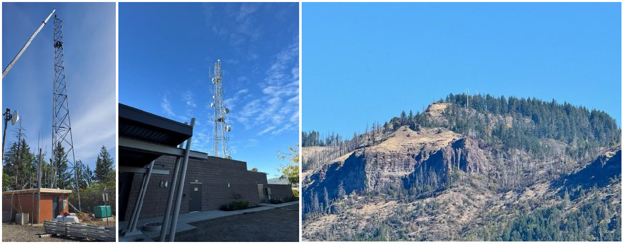
SALEM, Ore. — The Oregon Department of Emergency Management (OEM) wants to congratulate the Emergency Communications of Southern Oregon (ECSO 911)’s October 6 launch of the new countywide public safety radio system. ECSO 911 is the primary 911 center for Jackson County and Crater Lake National Park.
The new system strengthens radio communications between dispatchers and first responders across Jackson County and portions of Curry, Douglas, Klamath, Josephine, and Siskiyou (California) counties. The upgrade affects internal public safety radio communications and does not impact the ability of residents to call or text 911.
OEM’s statewide interoperability and preparedness teams partnered with ECSO 911, Jackson County and state and federal agencies to help support system planning and ensure compatibility with existing and future emergency communications infrastructure. The team supported technical coordination, grant alignment and statewide interoperability planning in coordination with the State Interoperability Executive Council, as the scope of the project grew to incorporate new technologies and improve redundancy.
“Interoperable, reliable communications save lives,” OEM’s Statewide Interoperability and Coordinator Jon Lee said. “Our interoperability and preparedness teams are proud to support this major upgrade, which strengthens Oregon’s emergency communications network and improves the safety of responders and the communities they serve.”
Project milestones include:
- A 2014 Department of Homeland Security grant awarded to Jackson County Fire District 3 to study public safety radio infrastructure.
- A 2016 conceptual design process that identified the P25 hybrid solution.
- Jackson County voters’ approval of a $28 million general obligation bond in 2019.
- A 2020 contract with Motorola Solutions and construction of 20 new or upgraded radio sites, including solar‑powered remote locations, completed in 2025.
- Deployment of about 1,700 to 1,800 radios to user agencies and extensive testing leading to the October 6 system cutover.
The project received additional support from the Oregon Legislature, the State Interoperability Executive Council, federal grant programs, the Oregon Department of Transportation, Oregon State Police and local public safety agencies.
OEM commends ECSO 911, Jackson County, partner agencies and local leaders for their collaboration and commitment to expanding and modernizing emergency communications in southern Oregon. Ongoing coordination among OEM, ECSO 911, fire and law enforcement agencies, and county service departments will help ensure a smooth transition and continued optimization of system performance.
The new system delivers real‑time, interoperable radio communications that enhance daily operations, mutual aid responses and multi‑agency coordination across both urban and remote areas.
It is the mission of the Oregon Department of Emergency Management (OEM) to lead collaborative, statewide efforts to support Oregon’s communities before, during and after emergencies, with a vision to create a ready and resilient Oregon. OEM prioritizes an equitable and inclusive culture of preparedness that empowers all Oregonians to thrive in times in crisis. For more information about OEM, visit oregon.gov/oem. You can get this document in other languages, large print, braille, or a format you prefer. For assistance, email [email protected]. We accept all relay calls, or you can dial 711.
Oregon Dept. of Forestry - 10/26/26 3:04 PM
Note: Oregon Department of Corrections sent out a media invite last week. This is the same event reminder.
News media is invited to attend:
What: The Oregon Department of Corrections (DOC) and Oregon Department of Forestry will jointly hold a 75th Anniversary Celebration of South Fork Forest Camp (SFFC) Oct. 29 from 11 a.m.-2 p.m. (NOT open to the public, by invite only.)
Over the last 75 years adults in custody (AICs) at SFFC have done great work in the Tillamook State Forest and beyond including:
- Planted more than 60 million seedlings
- Deployed to fight more than 1,000 wildfires with 150,000 workdays on those fires
- Maintained, made, or worked to improve 15 million feet of recreational trails
- Brushed 6,000 plus miles of forest roads
- Installed tree protection on 6.5 million trees (to keep wildlife from eating them)
- Felled more than 500,000 snags (dead, potentially hazardous trees)
- Constructed, cleaned up and supported an uncounted/tracked number of state forests REI (Recreation, Interpretation and Education) facilities
- Put in more than 1 million worker days on all their contributions over the last 75 years
Not only has all the AIC’s work been a big benefit to the public, but the positive social behavior modeling, training, job skills, and education they received while assigned to SFFC has set them up for success after incarceration.
Visuals: Talk with AICs at tables set up in an open house style about their work at SFFC. Take a tour of the ODF workshops where AICs are trained and work (wood, metal, firefighting, small engine repair/maintenance, and tool repair/maintenance. See DOC and ODF leadership outline the contributions over the last 75 years during the ceremony.
People on-site available to interview: DOC and ODF department leaders, present and past SFFC staff and various AICs at the tables.
When: Oct. 29
Where: South Fork Forest Camp in the Tillamook State Forest. 48300 Wilson River Hwy, Tillamook, OR 97141-9799. It’s about 1.5 miles up a gravel road after the turnoff from the highway. The ceremony will be in the big white tents.
Time: Meet at 10:45, ceremony begin at 11 a.m.
Please send an RSVP by Oct. 27. RSVP to [email protected] and/or [email protected]">[email protected] . (Note: Likely cells phone will not have coverage at South Fork.)
Special note: All AICs have signed photo releases some will be available to talk with and interview.
Background:
Oregon Department of Forestry : Adults in custody rehabilitation : Forest benefits : State of Oregon
Department of Corrections : Locations and Divisions : About Us : State of Oregon
Oregon Dept. of Forestry - 10/22/26 4:14 PM
SALEM, Ore. — The Regional Forest Practice Committee for northwest Oregon will meet at 11:30 a.m. on Thursday, Oct. 29 in the Santiam Room, Building D, ODF Headquarters, 2600 State Street, Salem. To join virtually, please use the Teams video conference information found on the agenda. To provide public comment, please email [email protected]">[email protected].
The committee’s agenda includes:
- Division and field updates
- Operator of the Year
- Workplan development
- Technical guidance development
- Compliance monitoring update
- Forest Practices Act training update
The public may attend in-person or online via Teams. Public comments will be accepted. Accommodations for people with disabilities, and special materials, services, or assistance can be arranged by calling at least 48 hours in advance of the meeting at 503-945-7200 or by email at [email protected]">[email protected].
Regional Forest Practices Committees are panels of citizens – mandated under Oregon law – that advise the Oregon Board of Forestry and may assist the Board of Forestry in developing appropriate forest practice rules. The committees are comprised of citizens qualified by education or experience in natural resource management. In 1971, the legislature enacted Oregon’s Forest Practices Act which includes three Regional Forest Practices Committees, serving the Eastern, Northwest, and Southwest regions of the state. Under Oregon law, a majority of the committees’ members must be private forest landowners and logging or forest operations companies.
Oregon’s forests are among the state’s most valued resources, providing a balanced mix of environmental, economic, and social benefits. View more information on the RFPC webpage.
Oregon Dept. of Forestry - 10/22/26 10:29 AM
SALEM, Ore. — The Compliance Monitoring Program Committee will hold a virtual meeting Thursday, Oct. 29, from 9 to 10:30 a.m. To join virtually, please use the Teams video conference information found on the agenda.
The committee’s agenda includes:
- Leadership and staffing updates
- CMP progress and future work
- Roads and steep slopes pilot study updates
The meeting is open to the public to attend online via Teams. Requests for an interpreter for the hearing impaired or other accommodations for persons with disabilities should be made at least 48 hours before the meeting by emailing [email protected]">Marta Frias-Bedolla.
The CMP Committee assists in efforts to monitor compliance with Forest Practices Rules. The committee advises ODF regarding monitoring projects and procedures. View more information on the CMPC webpage.
Oregon Dept. of Human Services - 10/23/26 11:42 AM
(Salem, Ore.) ― The Oregon Department of Human Services Office of Developmental Disabilities Services (ODDS) seeks public comment on the following Medicaid waivers:
- 1915 (c) Children’s Extraordinary Needs (CEN) Waiver
- 1915 (b) (4) Fee-for-Service Selective Contracting Program
Summary of substantial updates
Increase the number of children served in the CEN waiver
Originally, the 1915 (c) CEN Waiver could serve 155 children at one time. We’re increasing the number of children that can be in the CEN program to 230 children at a time. This helps us plan for children entering and leaving the program during the year. We’re also increasing the total number of children who can be in the CEN program during a one-year period from 171 to 280. We’re asking the Centers for Medicare and Medicaid Services (CMS) to approve this change retroactively to July 1, 2026.
Context for the proposed change: The CEN program started July 1, 2024. The Oregon Legislature gave the program a limited budget. At that time, we estimated that the program’s budget could support 155 children at a time. About 15 months after the program began, we had enough data to begin analyzing the program’s service usage. The average cost per child was lower than expected. Since then, the data continues to affirm this finding. That’s why we can expand the program to serve more children within its budget. The federal government doesn’t consider this a big change, so we can ask for a retroactive start date to July 1, 2026, which is when we expanded enrollment for the program.
Updated cost projections for CEN case management services
The 1915 (b) (4) Fee-for-Service Selective Contracting Program allows ODDS to specify the number and type of case management entities that are allowed to provide waiver case management services. Cost projections for CEN case management are included in this waiver. We are updating these projections to account for the increase in the number of children served in the CEN waiver. ODDS is asking CMS for a retroactive approval date of July 1, 2026.
How to submit feedback on the proposed changes
- Send an email to [email protected]">[email protected].
- Send written comments to ODDS Medicaid waiver/State Plan analyst, 500 Summer Street NE E-09, Salem, OR 97301.
The deadline for comments is Nov. 25, 2026. We must receive comments by this date.
More information
Read the drafted waivers and the community notice announcing these updates on the ODHS website.
Print versions of the updates are posted in local community developmental disabilities programs and support services brokerages.
To ask for a printed version, contact ODDS Medicaid Waiver/State Plan Analyst at 503-507-2083 or [email protected]">[email protected].
You can get this document for free in other languages, large print, braille or a format you need. Email [email protected]">[email protected] or call 503-945-5811. We accept all relay calls.
Attached Media Files: odds-2026-10-23-media-release-cen-waiver-en.pdf , odds-2026-10-23-media-release-cen-waiver-es.pdf
Oregon Dept. of Human Services - 10/22/26 1:40 PM
(Salem) — Medicare beneficiaries who would like to discuss plan options can receive free, confidential help from the Oregon Department of Human Services (ODHS) during Open Enrollment. Help includes comparing and selecting Medicare plans, reviewing their current coverage and assistance with making changes for the upcoming year.
Medicare Open Enrollment for 2027 plans began Oct. 15 and will remain open through Dec. 7, 2026.
The Senior Health Insurance Benefits Assistance (SHIBA) program provides free help from certified counselors who can help people understand their benefits and make informed decisions about their Medicare options.
During the Open Enrollment period, people with Medicare can:
- Switch from Original Medicare to a Medicare Advantage Plan,
- Switch from a Medicare Advantage Plan to Original Medicare,
- Change their Medicare Advantage Plan,
- Change or enroll in a Part D prescription drug plan, and
- Review changes in costs, coverage and provider networks.
SHIBA is one of several programs within the ODHS Office of Aging and People with Disabilities that provides services to older adults in Oregon regardless of their income. The information SHIBA provides not only supports older adults as they make decisions, but can help them recognize Medicare scams during Open Enrollment.
“Navigating Medicare coverage is complex and Oregonians should not have to navigate Medicare alone,” said APD Director Nakeshia Knight, Ph.D. “Our goal is to make that process easy, accessible, and free.”
Even if someone is happy with their current plan, a quick comparison can reveal better options. SHIBA certified counselors can help Oregonians compare plans and explain programs that can save them money on Medicare costs. Counselors can help beneficiaries avoid late-enrollment penalties and unexpected out-of-pocket charges, review annual plan changes, and ensure their prescriptions and preferred providers remain covered. Some Medicare beneficiaries may also qualify for cost-saving programs such as Medicare Savings Programs or Extra Help.
SHIBA reports scams to Medicare in addition to educating people on how to avoid Medicare scams or fraud. Common scams include claiming beneficiaries need a new card or offers of free medical equipment. These scams can happen by mail, over the phone, or by text and email. The best way to avoid Medicare scams is to keep Medicare numbers private; anyone who receives a message or email about Medicare from a number or person they do not recognize should not respond.
How to get free help
Help from SHIBA is available over the phone and through virtual and in-person appointments. To talk to a SHIBA certified counselor or to make an appointment, call SHIBA at 800-722-4134 (toll-free.)
Because high call volume during Open Enrollment may result in longer than usual wait times, Oregonians are also encouraged to access free resources on the SHIBA website at SHIBA.oregon.gov.
Online resources include:
- The 2027 Oregon Guide to Medicare Insurance Plans, which is available on the SHIBA website and will be translated to multiple languages in the coming weeks.
- Medicare frequently asked questions,
- An agent locator tool and
- A list of free virtual and in-person Medicare presentations
People who need Medicare help in a language other than English, including sign language, can call 833-685-0841 or send an email to [email protected]; after placing a request, a translator will reach out in the requestor’s preferred language to provide assistance in communicating with SHIBA.
About the Senior Health Insurance Benefits Assistance program
The Senior Health Insurance Benefits Assistance (SHIBA) program is part of the ODHS Office of Aging and People with Disabilities. It is a statewide network of certified counselors volunteering in their community to help all Oregonians make educated Medicare decisions. SHIBA offers free, objective, confidential and local one-on-one health insurance counseling and assistance to people with Medicare and their families.
This project is supported by the Administration for Community Living (ACL), U.S. Department of Health and Human Services (HHS) as part of a financial assistance award totaling $1,476,444 with 100 percent funding by ACL/HHS. The contents are those of the author(s) and do not necessarily represent the official views of, nor an endorsement, by ACL/HHS, or the U.S. Government.
Oregon Dept. of Revenue - 10/22/26 8:55 AM
(Salem, OR)—Oregon and the Internal Revenue Service (IRS) are once again recruiting people to assist in the free preparation of taxes as part of the Volunteer Income Tax Assistance (VITA) or Tax Counseling for the Elderly (TCE) programs, and the Department of Revenue’s Taxpayer Advocate is encouraging Oregonians to volunteer.
“Too often those tax credits go unclaimed,” said Codi Trudell, Oregon’s Taxpayer Advocate. “The cost and complexity of filing a tax return is a hurdle for too many people.
“Oregon needs more VITA sites and volunteers. By volunteering to help them file their returns and claim their credits, Oregonians can make a difference for people in their local community.”
Volunteers don’t need to be tax experts. Training is provided by the IRS.
In addition to the need for volunteers, the IRS is also seeking organizations to sponsor VITA and TCE clinics.
Each tax season, the Oregon Taxpayer Advocate Office offers an interactive map of free tax assistance sites in Oregon on the Department of Revenue website. The VITA sites are represented as blue dots on the map.
“Each blue dot represents an organization that has volunteered to make tax assistance available to the people in their community who need it,” Trudell said. “More volunteers will mean more blue dots and more opportunities for Oregonians to get the tax preparation assistance they need.”
The VITA and TCE programs include training in a variety of roles, including providing free tax help for low-to-moderate income families who need assistance preparing their tax returns. Across the country, thousands of people volunteer each year and prepare millions of tax returns at thousands of tax sites nationwide.
Volunteers are assigned to work with a sponsoring organization, first to receive training and then to begin volunteering at a location in the community. Training is offered both online and in the classroom. Tax sites are generally open nights and weekends, and the hours are flexible.
Additional information is available on the IRS website. Interested persons can submit an inquiry now using the VITA/TCE Volunteer and Partner Sign Up form moving them one step closer to becoming a VITA or TCE tax volunteer and giving back to their community. The IRS will share information about those interested in volunteering with sponsoring organizations for follow-up contact.
Organizations with an interest in partnering with the IRS to sponsor or host a free tax preparation site in Oregon can also complete and submit the VITA/TCE Volunteer and Partner Sign Up form.
To find a local VITA site, taxpayers can use the IRS Site Locator tool or check the Oregon Department of Revenue’s Free Tax Help map with VITA sites marked in blue.
Oregon Employment Department - 10/23/26 1:41 PM


For immediate release: October 23, 2026
Media Contact: [email protected]
Oregon Employment Department celebrates National Disability Employment Awareness Month
Salem, Ore. — The Oregon Employment Department (OED) is celebrating National Disability Employment Awareness Month (NDEAM) this October by highlighting how people with disabilities contribute to Oregon’s workforce and how employers can draw from this talented pool of individuals.
This year’s theme, “Celebrating Value and Talent,” recognizes the skills and contributions people with disabilities bring to workplaces, communities, and the economy.
WorkSource Oregon — a statewide partnership that includes OED’s Workforce Operations division — provides services to help job seekers with disabilities find jobs that match their skills and interests. WorkSource Oregon can also support employers in matching skilled people with disabilities with their specific job openings.
Job seekers, including those with disabilities, can meet one-on-one with staff to identify employment goals and develop a plan for their job search. Staff can help with resumes, applications, and interviews and connect job seekers with employers and job opportunities. Customers can also explore career options, training, and other resources that can help them prepare for and succeed in a new job.
“Oregon’s workforce is stronger when people have opportunities to use their skills, build careers, and contribute to their communities,” said OED Director Andrew R. Stolfi. “We’re honored to help job seekers with disabilities connect with opportunities to thrive in the workplace, and with partner agencies for added support.”
WorkSource Oregon partners include the Oregon Department of Human Services’ Vocational Rehabilitation program, the Oregon Commission for the Blind, and other workforce partners that provide individuals with disabilities with specialized employment services and supports. Vocational Rehabilitation helps remove possible barriers to employment, and the Oregon Commission for the Blind provides job search assistance, skills training, and workplace support for eligible Oregonians who are blind.
These WSO partnerships help job seekers identify career goals, build skills, and connect with employment opportunities. They also allow customers to access different types of support through Oregon’s broader workforce system as they move toward employment.
WorkSource Oregon also works with businesses that want to recruit and retain workers with disabilities. Staff can help employers reach potential candidates and connect with workforce resources. These partnerships can help businesses expand their talent pool while creating more opportunities for job seekers.
“Every job seeker brings different skills, experiences, and goals to their job search,” said Workforce Operations Director Jim Pfarrer. “We help job seekers with disabilities explore career opportunities, prepare for employment and connect with employers. We also work with our partners to make sure people can access the services and support they need to succeed.”
WorkSource Oregon staff can help employers who want to use National Disability Employment Awareness Month as an opportunity to explore how they can improve their recruitment, hiring and retention practices to expand opportunities for workers with disabilities. Disability can be apparent or non-apparent, and every worker brings different strengths, experiences, and perspectives to the workplace.
Job seekers and businesses can learn more about free WorkSource Oregon services and find their nearest WorkSource Oregon center at WorkSourceOregon.org.
People who need an accommodation or help accessing WorkSource Oregon services can also contact their local WorkSource Oregon center for help.
About Workforce Operations and WorkSource Oregon
The Oregon Employment Department’s Workforce Operations division is a partner in WorkSource Oregon, a consortium of state agencies and local workforce boards, and operates 37 WorkSource Oregon centers across the state. WorkSource Oregon offers a wide range of free services to job seekers, employers, and businesses, including personalized career coaching, resume writing, job search strategies, support for job postings and hiring incentives, and access to labor-market data. Visit worksourceoregon.org for more information.
Need help?
WorkSource Oregon (WSO) is an equal opportunity agency. WSO provides free help so you can use our services. Some examples are sign language and spoken-language interpreters, written materials in other languages, large print, audio, and other formats. To get help, please call 503-947-1680. TTY users call 711. You can also send an email to [email protected]">[email protected].
WorkSource Oregon (WSO) es una agencia de igualdad de oportunidades. WSO proporciona ayuda gratuita para que usted pueda utilizar nuestros servicios. Algunos ejemplos son intérpretes de lengua de señas e idiomas hablados, materiales escritos en otros idiomas, letra grande, audio y otros formatos. Para obtener ayuda, por favor llame al 503-947-1680. Usuarios de TTY pueden llamar al 711. También puede enviar un correo electrónico a [email protected]">[email protected].
###
Oregon Employment Department - 10/22/26 1:14 PM

For immediate release: Oct. 22, 2026
Media Contact: [email protected]
Media Advisory
WorkSource Oregon Lane invites job seekers to explore opportunities across five local industries
WHO: WorkSource Oregon Lane
WHAT: Weeklong job fair marathon
WHEN: Monday, Oct. 26, through Friday, Oct. 30, 2026
- Veterans and eligible spouses: Noon to 12:30 p.m. daily
- All job seekers: 12:30 to 4:30 p.m. daily
WHERE: 2510 Oakmont Way (south parking lot), Eugene, OR 97401
EUGENE, Ore. — WorkSource Oregon will host a weeklong job fair marathon at its Eugene location Oct. 26–30. Veterans and eligible spouses will receive priority of service each day from noon to 12:30 p.m. The job fair is open to all job seekers daily from 12:30 to 4:30 p.m.
Job seekers can meet local employers, explore entry-level positions, and learn about career pathways in Lane County. Each day will focus on a different industry:
- Monday, Oct. 26: Food, leisure, and hospitality
- Tuesday, Oct. 27: Distribution and retail
- Wednesday, Oct. 28: Manufacturing and production
- Thursday, Oct. 29: Government, education, and non-profit
- Friday, Oct. 30: Health care and social services
“Whether you’re launching a new career or taking the next step in your professional journey, our job fair marathon is a great place to start,” said Jim Pfarrer, Workforce Operations director for the Oregon Employment Department. “This event gives you a real advantage — the chance to learn what local employers value, make meaningful connections, share your resume, and even explore on‑the‑spot interview opportunities. We encourage everyone to come ready to engage, ask questions, collect contacts, and confidently show employers what you bring to the table.”
The event is free and open to the public. Job seekers are encouraged to register in advance. Members of the media are welcome to attend.
For more information, contact WorkSource Oregon Lane at 541-686-7601.
Job seekers can also visit QualityInfo.org to explore skills, wages, and career pathways for in-demand occupations and industries in Oregon.
The Oregon Employment Department and WorkSource Oregon partner with businesses and employers across the state to help connect them with qualified workers. Employers interested in collaborating on a hiring event or learning more about WorkSource Oregon employer services can contact [email protected]">[email protected].
About Workforce Operations and WorkSource Oregon
The Oregon Employment Department’s Workforce Operations division is a partner in WorkSource Oregon, a consortium of state agencies and local workforce boards, and operates 37 WorkSource Oregon centers across the state. WorkSource Oregon offers a wide range of free services to job seekers, employers, and businesses, including personalized career coaching, resume writing, job search strategies, support for job postings and hiring incentives, and access to labor-market data. Visit worksourceoregon.org for more information.
Need help?
WorkSource Oregon (WSO) is an equal opportunity agency. WSO provides free help so you can use our services. Some examples are sign language and spoken-language interpreters, written materials in other languages, large print, audio, and other formats. To get help, please call 503-947-1680. TTY users call 711. You can also send an email to [email protected]">[email protected].
WorkSource Oregon (WSO) es una agencia de igualdad de oportunidades. WSO proporciona ayuda gratuita para que usted pueda utilizar nuestros servicios. Algunos ejemplos son intérpretes de lengua de señas e idiomas hablados, materiales escritos en otros idiomas, letra grande, audio y otros formatos. Para obtener ayuda, por favor llame al 503-947-1680. Usuarios de TTY pueden llamar al 711. También puede enviar un correo electrónico a [email protected]">[email protected].
###
Oregon Health Authority - 10/26/26 3:39 PM
October 26, 2026
Media contact: Erica Heartquist, [email protected]
Breast cancer survivors emphasize early detection, community support
Two survivors share their experiences during Breast Cancer Awareness Month and encourage people to seek screening guidance and support
PORTLAND, Ore. – When Susan Stearns found a lump in her breast eight years ago, she scheduled a mammogram that day. Within weeks, she was diagnosed with breast cancer.
Today, as CEO of Pink Lemonade Project, Stearns draws on her experience to help others navigate diagnosis, treatment and life beyond cancer.
During Breast Cancer Awareness Month, Stearns and Brooks Fuentes, program associate for community support at Young Survival Coalition (YSC), are sharing their personal experiences to emphasize the importance of breast health, early detection and emotional support. “I found a lump in the shower in April of 2018 and panicked,” Stearns said. “I almost knew I had breast cancer, but I scheduled a mammogram that day rather than worrying about it and putting it off.”
Founded in Vancouver, Wash., 16 years ago, Pink Lemonade Project serves 42 counties across Oregon and southwest Washington. Its programs provide emotional, practical and financial support to people affected by breast cancer at every stage, including those living with metastatic disease.
“Breast cancer incidence rates are climbing for women under 40 —so before the screening age,” Stearns said. “We know that more younger women, and specifically people of color, are getting diagnosed with triple-negative breast cancer, which is a more complicated kind to treat. We know that people in rural communities are getting diagnosed at later stages and with a diagnosis are dying at higher rates than they are in urban areas.”
“The fact is one in seven women will be diagnosed in this region,” Stearns added, “so it’s more important than ever to educate people how to do a self-exam, when to start getting screened and why early detection can be lifesaving.”
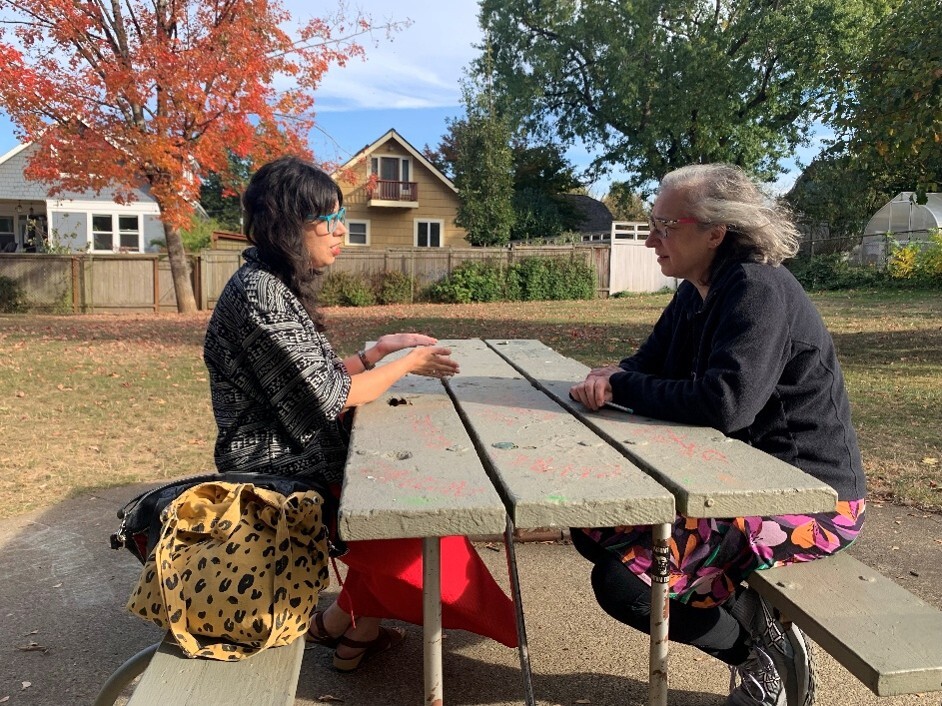
Brooks Fuentes (left) and Susan Stearns (right) have become friends through their shared experiences
Finding support through treatment
For Fuentes, a family history of breast cancer prompted her to get her first mammogram at age 36. Her mother had been diagnosed with metastatic breast cancer at 46 and later died from the disease.
“I saw my mom go through metastatic breast cancer and pass away and knew that that was just so important from the get-go,” Fuentes said. “I was diagnosed with cancer right then. I couldn't even feel it.”
Fuentes was diagnosed with stage 2 invasive ductal carcinoma. Her treatment included chemotherapy, lumpectomy, radiation and immunotherapy.
She turned to local organizations, including Pink Lemonade Project and Breast Friends, as well as YSC, to find others who understood what she was experiencing.
“And it really saved my life,” Fuentes said. “Just as a clinician will give you chemotherapy, you also need that psychosocial support. And I was able to find some of my best friends through these organizations.”
Now a five-year breast cancer survivor, Fuentes helps connect others with resources and community through her work at YSC. She understands how isolating a diagnosis can be, especially for younger adults who may struggle to find others facing similar experiences.
“When you're the youngest person in that cancer waiting room, you feel so isolated and alone,” she said. Fuentes encourages people to understand their individual risk and talk with a health care provider about appropriate screening, particularly if they have a family history of breast cancer or notice changes in their body. “I'm a five-year survivor and doing great. So, early detection and knowing your normal is essential,” she said.
“The really big message is that pink is not just a marketing tactic,” Stearns said. “We are literally talking about a preventable and screenable cancer, where, if caught early, there are more life-saving treatments than ever before.”
Both women’s experiences underscore an important message: know your body, understand your risk, and seek timely, regular screenings. It is crucial. And when breast cancer changes a person's life, compassionate support and connection is just as important as medical care, making a meaningful difference throughout the healing journey.
People affected by breast cancer, including family members and caregivers, can learn more about resources and support through these organizations:
- Oregon ScreenWise Program: ScreenWise
- Pink Lemonade Project: pinklemonadeproject.org
- Young Survival Coalition: youngsurvival.org
- Breast Friends: breastfriends.org
##
Oregon Health Authority - 10/22/26 3:06 PM
October 22, 2026
Media contact: Jonathan Modie, [email protected]
As climate hazards increase, Oregon communities fight back
OHA’s annual Climate and Health report shows extreme heat, wildfire smoke, drought are continuing burdens, but local projects are building resilience
PORTLAND, Ore.—Climate hazards are happening with more frequency in Oregon, with more days of extreme heat and wildfire smoke—and, in many areas, combinations of both—than 20 years ago, a new Oregon Health Authority (OHA) report shows.
But communities are fighting back with projects to mitigate the effects on human health, according to the OHA Public Health Division’s Climate and Health in Oregon report for 2025. These efforts are building resilience against worsening climate-related threats that can cause serious illnesses and death.
For example, Marion County is working with local partners to lower energy costs for older adults through home energy assessments and connect residents with contractors to install heat pumps and home weatherization. Jackson and Josephine counties and partners hosted a health fair in 2025 so more than 800 residents could learn about wildfire smoke risks and preparedness strategies.
“This year’s Climate and Health in Oregon report demonstrates that extreme climate effects continue to be a reality of our daily lives in Oregon,” said Public Health Division Director Naomi Adeline-Biggs. “We must continue supporting communities as they identify new, innovative, equitable approaches to adapting to these hazards and limiting health risks.”
Stark findings
Among the report’s starkest findings: between 2006 and 2025, the estimated number of days with extreme heat nearly doubled; wildfire smoke days tripled; and days with heat and smoke more than quadrupled. Rural counties in eastern, central and southern Oregon were hit hardest, racking up the highest number of extreme heat days, and rural southern and central counties with the highest total days with smoke.
However, wildfire smoke days increased fastest in Oregon’s biggest population centers. Even though Multnomah and Washington counties experience less smoke than other areas, the amount of wildfire‑related particulate matter in the air is now rising on average more quickly in these heavily populated areas than in other parts of the state.
In addition, the state experienced multiple drought periods, with widespread drought in 2015. In 2021, extreme drought affected half the state.
Damaging effects
The effects across Oregon have been damaging, the report shows.
From 2016 to 2025, hospital emergency departments saw spikes in visits for heat-related illnesses and smoke-related, non-infectious respiratory illnesses. Southern, central and eastern Oregon experienced some of the highest annual heat-related illness visit rates from 2016 to 2025. Although regions in western Oregon experienced lower annual heat related illness rates overall, all regions experienced increases during periods of extreme heat.
The report highlights impacts that extend beyond extreme heat and wildfires:
- Youth mental health: In 2025, results from the 2024 Oregon Student Health Survey showed 71% of Oregon 11th-graders reported experiencing stress about the future due to climate change, and 37% said these feelings negatively affected their lives.
- Harmful algae blooms: In 2025, OHA investigated 51 suspected harmful algae bloom events, issued 20 freshwater recreational use health advisories, and detected microcystin and saxitoxin levels that exceeded recreational use values.
- Mosquito-borne disease risk: In 2024 and 2025, routine mosquito surveillance identified Aedes aegypti in Jackson County, a mosquito species predominantly found in tropical and subtropical areas and the primary vector for diseases like dengue and Zika. This species of mosquito had not previously been detected in Oregon.
Communities are adapting
Like Marion, Jackson, and Josephine counties, agencies and organizations are finding new ways to help their communities adapt to climate change.
The Center for African Health and Education, a Portland-based, East African-led organization, used an OHA Public Health Equity grant to hold monthly workshops for the African refugee and immigrant communities on heat, air quality and wildfire smoke safety. It also created a messaging group so people could stay connected and get climate and health-related updates.
Latino Network, an organization focused on culturally specific practices and services, used a Public Health Equity grant to host its annual Conoce tu río, conoce tu comida: Know your river, know your food workshop. Participants exchanged cultural stories, learned about environmental health risks, and discussed ways to protect water and fishing tradition.
Carolina Hernandez, workforce development manager in Latino Network’s Department of Health and Wellness, said culturally specific climate adaptation is critical. “People share the stories of when they were in their counties of origin and how they went to the rivers, how they cook, how they spent days with the entire family sharing their lives and fishing ... We try to give space to the communities so they can do the same here.”
Another climate adaptation project involved OHA’s Youth Advisory Council, a group of 15- to 19-year-olds from across Oregon who provide input on health policies and initiatives related to well-being. Members of the council’s youth data subcommittee analyzed results from the 2024 Student Health Survey to find out how climate change is affecting youth.
Among the findings: stress arises from youth feeling climate change is out of their control and teaching lacks actionable steps or youth-led examples; Latinx, Middle Eastern, North African and Asian youth and those who identify as gender diverse or non-binary reported disproportionate mental health impacts of climate change; and students need mental health support from school counselors and other trusted adults who are knowledgeable about climate change.
“Students were saying the more you understand climate change, the more anxious or stressed you might feel,” said Andres Pineda, who attends Portland State University. “The issue is that students felt like there're not enough resources or different programs available to actually make a difference with climate change, to actually do something about it.”
Olivia Sun, a student at Jesuit High School in Beaverton, said the analysis shows youth are eager to help address climate hazards. “Just an opportunity for youth to be able to learn about it, an opportunity for youth to be able to feel like they're part of the solution,” she said, “would be great in resolving some of the anxiety and helplessness youth feel about climate change.”
Oregon and its partners are taking additional steps to adapt to climate threats. Investments in modernizing the state’s public health system help OHA, the Nine Federally Recognized Tribes of Oregon, local public health authorities and community-based organizations implement programs and policies focused on preparing and responding to more frequent and severe hazards.
Healthy Homes Grant Program funding helped local organizations make home upgrades that reduce health and safety risks, improve indoor conditions and create healthier living environments for low-income individuals and historically underserved communities.
For more information, visit www.healthoregon.org/climate.
Oregon Health Authority - 10/22/26 2:37 PM
October 22, 2026
Media contact: Jonathan Modie, [email protected]
OHA publishes final report on health risks from Crook County wells
PORTLAND, Ore.—Oregon Health Authority (OHA) has published its final report analyzing health risks related to drinking water from domestic wells near Prineville.
The Environmental Health Assessment Program in OHA’s Public Health Division today published its health consultation report following a two-month public comment period. The report found water in many of the nearly 60 domestic wells tested north of Prineville pose some level of health risk from contaminants—arsenic, nitrates and some coliform bacteria—common in Oregon wells.
In the report, OHA evaluated testing results for water samples and found about half of the wells had detectable levels of lead, which typically is from plumbing. About half also had manganese levels that can cause bad taste, discoloration, and cloudiness. Seven wells had manganese levels high enough to pose health risks to children under 1 year old, were they to drink it.
The report includes recommendations for households to mitigate risk and address well contamination, such as seeking blood lead testing, especially for children; treating their water; and verifying treatment effectiveness with additional testing.
OHA has shared well sampling results and health risk information with affected residents and offered one-on-one consultation with an OHA toxicologist.
The final report is unchanged from the public comment draft OHA released in June 2026, except for the inclusion in the appendix of five comments received during the comment period, along with OHA’s responses to the comments. All the comments were on topics outside the scope of OHA’s analysis and did not result in changes to the report.
OHA recognizes that access to safe drinking water is critical to the health of all people in Oregon. While the agency does not regulate the quality of private well water, it supports domestic well users by directing them to informational resources about well water testing, maintenance, and treatment, and health risks from contaminants.
The Crook County health consultation and supporting materials are on the OHA website at www.oregon.gov/crookcowells.
###
Oregon Health Authority - 10/21/26 3:44 PM
October 21, 2026
Media contact: Erica Heartquist, [email protected]
Recreational use advisory downgraded to a precaution for Cullaby Lake
Pet owners should continue to keep their pets away from areas that appear to have a bloom
PORTLAND, Ore. – Oregon Health Authority (OHA) has downgraded the recreational use health advisory to a precaution for Cullaby Lake.
OHA issued the advisory Sept. 17.
Water monitoring has confirmed that the level of cyanotoxins in Cullaby Lake are below recreational guideline values for people. However, levels detected are still above OHA’s educational guideline values for dogs, and owners should keep their pets away from areas with blooms.
OHA advises recreational visitors to continually be alert to signs of cyanobacteria blooms. This is because blooms can develop and disappear on any water body at any time when bloom conditions are favorable. Only a fraction of water bodies in Oregon are monitored for blooms and toxins, so it’s important for people to become familiar with the signs of a bloom, and exposure routes and symptoms by visiting OHA’s Cyanobacteria (Harmful Algae) Blooms website at http://www.healthoregon.org/hab.
When recreating, people, and especially small children, and pets should avoid areas where the water is foamy, scummy, thick like paint, pea-green or blue-green, or if thick brownish-red mats are visible or bright green clumps are suspended in the water. If you see these signs, avoid activities such as swimming or motorized or non-motorized boating activities that cause you to swallow water or inhale droplets, and keep pets out of the area.
Cyanotoxins can still exist in clear water. When a bloom dies, toxins released may reach into clear water around the bloom. Blooms can be pushed into other areas, leaving toxins behind. There also are species of cyanobacteria that anchor themselves at the bottom of a water body, live in the sediment, or can grow on aquatic plants and release toxins into clear water.
For health information or to report an illness, contact OHA at 971-673-0482, or visit OHA’s Cyanobacteria (Harmful Algae) Blooms website.
###
Oregon Housing and Community Services - 10/26/26 1:56 PM
Renovations at Rose Schnitzer Tower preserve affordable housing while improving safety, accessibility, and quality of life for residents
SALEM, Ore. — Oregon Housing and Community Services (OHCS) joined Guardian Real Estate Services, Robinson Jewish Home, and other community partners earlier this month to celebrate the grand reopening of Rose Schnitzer Tower, marking a major investment in preserving 233 affordable homes for adults in downtown Portland.
Rose Schnitzer Tower provides 233 one-bedroom apartments for older adults earning at or below 60% of the area median income. Preserving these homes will ensure affordability while delivering essential improvements that enhance residents’ safety, comfort, and quality of life.
“Day by day, community by community, we are working to build a more affordable future for Oregonians,” said OHCS Executive Director Andrea Bell. “This progress means long term affordability and a home that delivers the dignity Oregonians deserve.”
OHCS supported the preservation project with $21.2 million in Low-Income Housing Tax Credits and $38 million in conduit bonds. These investments helped finance extensive renovations to the building’s interior and exterior, including upgrades to improve safety, accessibility, and energy efficiency.
Improvements include modernized bathrooms, upgraded heating and cooling systems, new hot water boilers, and other essential building enhancements designed to extend the property’s lifespan and provide a more comfortable living environment for residents.
About Oregon Housing and Community Services (OHCS)
OHCS is Oregon's housing finance agency. The state agency provides financial and program support to create and preserve opportunities for quality, affordable housing for Oregonians with low and moderate incomes. OHCS administers programs that provide housing stabilization. OHCS delivers these programs primarily through grants, contracts, and loan agreements with local partners and community-based providers. For more information, please visit: oregon.gov/ohcs.
[email protected]
Oregon Parks and Recreation Dept. - 10/21/26 9:49 AM
Salem, Ore. — The Oregon Parks and Recreation Department’s All-Terrain Vehicle (ATV) Advisory Committee will meet Nov. 4 to review online and hands-on training stats, incident reporting, legislative updates and other ATV Program updates.
This will be a hybrid meeting with options to attend in person or via Zoom webinar – details below. The public can join as attendees. In the event that an in-person meeting is no longer feasible, the meeting will just be held on Zoom.
The ATV Advisory Committee meeting will begin at 9 a.m. The agenda and schedule are posted online.
Meeting details
Join in person
Best Western Mill Creek Inn
3125 Ryan Dr SE,
Salem, OR 97301
Join virtually via Zoom
Webinar ID: 844 9135 5047
Passcode: 120548
Join via audio only: 253-215-8782
Special accommodations may be arranged up to 72 hours in advance to improve accessibility by emailing [email protected].
The ATV Grant Program provides funding statewide for ATV recreation. Grant funds come from ATV user permit sales and a percentage of gasoline tax money. Read more about the state ATV program.
Oregon State Marine Board - 10/22/26 3:52 PM
The Oregon State Marine Board will hold its quarterly board meeting beginning at 8:30 am on October 29 at the Bandon Public Library in the Sprague Room, located at 1204 11th St. SW. On October 28, the Board will hold a Work Session at 1 pm at the Bandon Community Center, 1200 11th St. SW. The Marine Board will discuss advancing boating technology during the work session.
Local recreational boaters are encouraged to attend the Work Session on the 28th and the Board meeting on the 29th; however, public comment will only be accepted at the beginning of the Board meeting and not the work session.
The following items are on the agenda:
- Director’s Report
- Free Waterway Access Days; informational
- NGO Outreach Programs and Grant Funding Update; informational
- Mini-Jet Boat Update; informational
- Wind Sport Regulations; informational
- Life Jacket Rulemaking; Board Vote
- Snake River Reciprocity for Outfitter Guides Rulemaking; Board vote
Public comments will be accepted in writing or during the meeting’s public comment period before the agenda items. To provide oral testimony, register by 5 p.m. on October 27, with Jennifer Cooper at [email protected]">[email protected] or by mail: Oregon State Marine Board, Attn: Jennifer Cooper, 435 Commercial St. NE, Suite 400, Salem, OR 97301.
Meeting materials and live stream link are available on the agency’s Public Meetings page.
Marine Board meetings use the Microsoft Teams application, and viewing may require installing the free Teams app.
Visit Boat.Oregon.gov to learn more about the Marine Board, Oregon’s recreational boating agency.
-End-
Public Information Officer
Oregon State Marine Board
971-707-2396
[email protected]
Lane Co. Government - 10/21/26 3:05 PM
If you did not make it to the event today but would like video to use, a recording of the ribbon cutting is available at https://vimeo.com/1238168385?share=copy.
--
Lane County residents have new options for recycling materials that don’t belong in curbside recycling bins with the opening of four RecycleOn Centers at the Cottage Grove, Glenwood, Florence, and Veneta transfer stations.
To mark the expansion, Lane County will host a ribbon-cutting ceremony Wednesday, October 21, 2026, at 10:00 a.m. at the Glenwood Transfer Station (3100 E. 17th Avenue, Eugene). The event will highlight the partnership between Lane County and Circular Action Alliance and the new recycling opportunities available to residents.
The new centers provide free, convenient drop-off recycling for materials that require separate collection, including plastic bags and film, shredded paper, aluminum foil, plastic lids, and other specialty materials.
The openings build on Lane County’s existing transfer station network and represent another step in the County’s ongoing work to make recycling more accessible to residents throughout the region.
“Our transfer stations already play an important role in providing recycling services throughout Lane County, so adding RecycleOn Centers is a natural extension of that work,” said Lane County Waste Management Division Manager Jeff Orlandini. “These new centers give residents more options to keep valuable materials out of the landfill, while making it easier to recycle items that don’t belong in mixed recycling.”
The centers are part of RecycleOn Oregon, the statewide recycling education and collection program developed by Circular Action Alliance (CAA) as part of Oregon’s Plastic Pollution and Recycling Modernization Act.
Oregon’s Recycling Modernization Act (RMA) began implementation in July 2025 and created a new system in which producers of packaging, paper products, and food serviceware help fund improvements to Oregon’s recycling system. Circular Action Alliance is Oregon’s approved producer responsibility organization responsible for implementing many of those requirements.
The law is bringing new investment into local recycling systems, including expanded collection opportunities for materials that are difficult to collect through traditional mixed recycling programs. The Oregon Department of Environmental Quality identifies expanded recycling service and depot collection among the activities eligible for producer funding under the RMA.
For Lane County, the partnership with CAA means residents can now bring additional materials to existing County transfer stations where they can be collected separately and sent through appropriate recycling channels.
“Opening these sites is a great example of what the Recycling Modernization Act can look like at the local level,” Orlandini said. “Lane County provides the local infrastructure and operational experience, while producer funding helps expand the range of materials our residents can recycle. Ultimately, that means better access and more opportunities to recover materials instead of throwing them away.f
Know before you go
Materials brought to RecycleOn Centers must be sorted by material type and placed in the appropriate collection area. Residents should check the accepted-material list before visiting because RecycleOn Centers collect materials differently than curbside or mixed recycling programs. RecycleOn says more than 140 of the free drop-off centers are expected to open throughout Oregon by the end of 2027.
For more information about Oregon’s Recycling Modernization Act and to see the current list of accepted materials and find RecycleOn Center locations, visit recycleon.org/oregon. For information about recycling and waste prevention in Lane County, visit lanecountyor.gov/recycle.
About RecycleOn Oregon
RecycleOn Oregon is the statewide campaign created by Circular Action Alliance with input from local governments, service providers, community members, and others to help Oregonians understand and navigate changes to the state’s recycling system. RecycleOn Centers provide free drop-off locations for certain materials that cannot be placed in recycling bins at homes or businesses.
About Lane County Waste Management
Lane County Waste Management provides safe and responsible solid waste disposal, recycling, waste prevention, and resource recovery services throughout Lane County. The County operates a regional network of transfer stations and works with community, government, and private-sector partners to reduce waste, expand recycling opportunities, and conserve landfill capacity.
###
Lane Co. Government - 10/21/26 8:00 AM
Voters are urged to return their ballots as early as possible to ensure they are received at Lane County Elections by the 8:00 p.m. deadline on Tuesday, November 3.
In order to be counted, ballots must be received at Lane County Elections by:
- A 24/7 County ballot drop box by 8:00 p.m. on November 3. Help save taxpayer dollars by avoiding the postage and using a drop box, managed directly by Lane County Elections.
- Lane County Elections. Ballots can be turned in by November 3, 2026 directly to the Lane County Elections Office during business hours (open until 8:00 p.m. on Election Day).
- Regular mail. Ballots must be postmarked no later than November 3, 2026 and received no later than November 10, 2026 to be counted. USPS recommends putting a ballot in the mail seven days before the election or getting a manual hand-stamp postmark at the service counter of local post offices.
“The best way for voters to return their ballots is to place them in one of our 25 official ballot drop boxes across the county,” said Lane County Clerk Tommy Gong. “If voters plan to return their ballots in the mail they should do so early – by October 27 – in order to make sure they meet postmark and delivery deadlines.”
Voters must also remember to sign their ballot return envelopes before mailing or returning their completed ballot to Lane County Elections.
The signature is a security measure used to verify identity. Signatures are compared to those in the voter registration record. A ballot may only be counted if the signatures match.
If you forget to sign the envelope or your signature does not match, you will receive a notice from Lane County Elections advising you of the issue and how to fix or “cure” it. You have until the 21st day after the election to cure your signature issue and have your ballot counted.
What can you do to ensure your signature matches?
- Sign your natural signature. If you don’t usually sign with a middle initial don’t sign your ballot envelope with it. Election workers are trained to look for specific characteristics within each signature. If you think your signature has changed significantly, contact Lane County Elections.
- Don’t sign another person’s name. Even if someone gives you permission to sign, or you have power of attorney, it is against the law in Oregon to sign another person’s name on a return envelope. It’s forgery.
- Request help if you have difficulty signing. If it is difficult for you to sign, on either a temporary or permanent basis, you can complete a signature attestation form and return it to Lane County Elections. Completing this step will allow you to use a signature stamp or other indicator that represents your signature.
- Correct a mistake if you accidentally sign your name on someone in your household’s envelope. If you and another person in your household sign each other’s return ballot envelopes, simply place a line through the incorrect signatures and sign the correct envelopes.
Voters can also track the status of their ballot using BallotTrax. Voters who sign up will get notifications when their ballot is received by Lane County Elections, accepted for counting, and if they have a missing or non-matching signature issue that needs to be corrected. The service is provided by the Oregon Secretary of State’s Office for the November 3 election. Availability in future elections is dependent upon state funding. Sign up for BallotTrax at www.OregonVotes.gov/track.
Voters with questions can email [email protected] or call 541-682-4234.
About the Lane County Elections Office:
The Elections Office, located at 275 W. 10th Avenue in Eugene, is responsible for conducting elections in Lane County. The Elections Office manages voter registration, the processing of mail ballots, recruitment and training of election workers, and certification of elections.
###
U.S. Attorney's Office - District of Oregon - 10/26/26 3:40 PM
PORTLAND, Ore.— The U.S. Attorney’s Office for the District of Oregon announced today the completion of a coordinated, five‑week federal law enforcement operation targeting firearms and narcotics trafficking in the Portland metro area.
From August to September 2026, the U.S. Attorney’s Office and the Bureau of Alcohol, Tobacco, Firearms and Explosives (ATF)—working with the Drug Enforcement Administration (DEA) and federal local law enforcement partners—conducted an enforcement operation in the Portland metro area targeting narcotics and firearms trafficking. Using data to identify high‑risk locations, agents carried out investigative work, resulting in the seizure of 97 firearms and a significant quantity of illicit drugs, including methamphetamine, cocaine, crack cocaine, and fentanyl.
Seventeen individuals have been arrested to date:
Steven Hatcher
Aaron Stauffera
Manuel Bernal
Jay Williams Gimbal Reynolds
Oscar Yanez
Anthony Connelly
Jeanni Crane
Francisco Claudillo-Dimas
Kenneth Hamilton
Makayla Williams
Gus Wayne
Ryan Grant
Carlos Ruiz-Perez
Melanee Bybee
Michael Hoeft
Kristy Roberts
Thomas Dingus
“Every gun seized is a life saved. Every gram seized is a life saved. This operation sends a clear message: if you traffic illegal guns or deadly narcotics in our communities, you will be held accountable,” said Scott Bradford, U.S. Attorney for the District of Oregon. “By working closely with our federal and local partners, we removed dangerous firearms and destructive drugs from our streets and put a stop to criminal activity that threatens the safety of every Oregonian. We will continue using every tool available to protect our neighborhoods and ensure those who endanger our community face justice.”
“Violent crime is not only a threat to innocent lives but also to our way of life,” said Jonathan Blais, Special Agent in Charge, ATF Seattle Field Division. “By removing trafficked firearms and dangerous drugs from the streets of Portland, we have made a meaningful difference, most notably for the residents, students, and visitors to this community. I want to thank our law enforcement and prosecutorial partners who joined us in our mission to reduce violent crime and disrupt both firearms and drug trafficking in this city. ATF remains committed to delivering measurable results and lasting public safety.”
“Drug trafficking and violence go hand in hand, putting innocent lives and entire communities at risk,” said Robert A. Saccone, Special Agent in Charge, DEA Seattle Field Division. “DEA is committed to reducing violence in America’s most affected cities. This operation demonstrates what we can accomplish when law enforcement partners unite to take dangerous drugs, firearms, and violent offenders off our streets. Through Fentanyl Free America, DEA will continue working alongside our federal, state, and local partners to disrupt the fentanyl supply chain, reduce its availability, and save American lives.”
The following law enforcement partners participated in this operation:
- U.S. Attorney’s Office
- Bureau of Alcohol, Tobacco, Firearms and Explosives (ATF)
- Drug Enforcement Administration (DEA)
- High Intensity Drug Trafficking Areas (HIDTA) Program
- Federal Bureau of Investigation (FBI)
- U.S. Department of Homeland Security
- U.S. Marshals Service
- Gresham Police Department
- Portland Police Bureau
- Port of Portland Police Department
- Salem Police Department
- Multnomah County District Attorney’s Office
- Multnomah County Sheriff’s Office
- Multnomah County Parole & Probation Department
- Washington County Sheriff’s Office, Community Violence Reduction Team
- Hillsboro Police Department, Westside Interagency Narcotics Taskforce (WIN)
- Scappoose Police Department
U.S. Attorney's Office - District of Oregon - 10/26/26 9:52 AM
PORTLAND, Ore.— Scott E. Bradford, U.S. Attorney for the District of Oregon, will hold a press conference on Monday, October 26, 2026, alongside multiple law enforcement partners—including the Bureau of Alcohol, Tobacco, Firearms and Explosives (ATF), the Drug Enforcement Administration (DEA), the Portland Police Bureau, and the Gresham Police Department—to announce the results of a coordinated federal law enforcement operation.
|
Date |
Monday, October 26, 2026 |
|
Time |
Camera preset at 2:15 p.m. Press conference to begin at approximately 2:30 p.m. |
|
Speakers |
U.S. Attorney Scott Bradford FBI Special Agent in Charge Doug Olson |
|
Location |
U.S. Attorney’s Office, District of Oregon |
|
Access |
All credentialed media are invited to attend. |
|
Photo/Video |
Credentialed media are welcome to use camera and audio equipment during the press conference. Livestreaming is permitted, but public Wi‑Fi is not available. Use of camera and audio equipment is prohibited throughout the courthouse except within the designated press conference area. |
|
RVSP |
Please RSVP to [email protected]">[email protected] to confirm attendance.
|
U.S. Attorney's Office - District of Oregon - 10/23/26 5:47 PM
U.S. Attorney, Federal Law Enforcement to Announce Results of
Coordinated Enforcement Operation
PORTLAND, Ore.— Scott E. Bradford, U.S. Attorney for the District of Oregon, will hold a press conference on Monday, October 26, 2026, alongside multiple law enforcement partners—including the Bureau of Alcohol, Tobacco, Firearms and Explosives (ATF), the Drug Enforcement Administration (DEA), the Portland Police Bureau, and the Gresham Police Department—to announce the results of a coordinated federal law enforcement operation.
|
Date |
Monday, October 26, 2026 |
|
Time |
Camera preset at 2:15 p.m. Press conference to begin at approximately 2:30 p.m. |
|
Speakers |
U.S. Attorney Scott Bradford |
|
Location |
U.S. Attorney’s Office, District of Oregon |
|
Access |
All credentialed media are invited to attend. |
|
Photo/Video |
Credentialed media are welcome to use camera and audio equipment during the press conference. Livestreaming is permitted, but public Wi‑Fi is not available. Use of camera and audio equipment is prohibited throughout the courthouse except within the designated press conference area. |
|
RVSP |
Please RSVP to [email protected]">[email protected] to confirm attendance.
|
U.S. Attorney's Office - District of Oregon - 10/23/26 3:48 PM
EUGENE, Ore.— Linh Luu and Kevin Le, a husband and wife from Anaheim, California, pleaded guilty today in federal court in Eugene, Oregon, to violating the Lacey Act. The court sentenced them to three years’ probation and a $10,000 fine each for their roles in trafficking wildlife between Oregon and Vietnam.
According to court documents and statements made in court, Luu and Le admitted that between September 2019 and May 2021, they processed $51,100 in payments to help an individual in Vietnam illegally move wildlife items to and from Oregon. The trafficked items included American black bear gallbladders and cougar bones, which were shipped to Vietnam; and lion teeth, segments of black rhinoceros and white rhinoceros horns, and a tiger pelt, all of which were imported into Oregon.
According to court documents, Luu and Le met an undercover federal agent in December 2020 in a parking lot. They accepted $12,000 in cash as a down payment for part of a rhino horn and discussed methods to avoid U.S. banking regulations designed to detect illicit transactions. They later each received nearly $5,000 in electronic payments for the horn segment, which was shipped to Oregon disguised as a household decoration. The sale was discussed as a way to build trust for future, larger deals.
“Wildlife trafficking threatens some of the world’s most vulnerable species and fuels criminal networks that profit from their destruction,” said Scott Bradford, U.S. Attorney for the District of Oregon. “This case demonstrates that our office will hold accountable not only the poachers, but also the financial facilitators who keep these markets alive. We are committed to working with our federal and state partners to disrupt these networks and protect endangered wildlife for future generations.”
“This investigation clearly illustrates that wildlife trafficking isn’t a victimless, white‑collar crime. It’s the financial engine behind the slaughter of species like rhinos, tigers, and black bears,” said Doug Ault, Assistant Director, Office of Law Enforcement, U.S. Fish and Wildlife Service. “Every dollar laundered through wildlife trafficking networks represents real damage that cannot be undone. Poachers take the wildlife, but organizers and financial facilitators make the killing profitable, and the Service and our law enforcement partners will continue pursuing everyone who builds and bankrolls these networks.”
All of the wildlife involved in this case is protected under the Convention on International Trade in Endangered Species of Wild Fauna and Flora (CITES), a treaty signed by the United States, Vietnam, and 183 other governments to regulate commercial trade in species that are or may become extinct. Trade in listed species is prohibited without a permit, which the defendants did not obtain. Black bears and cougars are native to Oregon and are prized by some for use in traditional Asian medicine. Lions, tigers, and black and white rhinoceroses are also protected under the Endangered Species Act. The Lacey Act, the nation’s oldest wildlife trafficking statute, prohibits, among other things, buying or selling wildlife that was illegally imported or exported.
The U.S. Fish and Wildlife Service’s Office of Law Enforcement investigated the case with assistance from Homeland Security Investigations and the Oregon State Police. The case was prosecuted by Assistant U.S. Attorney William McLaren and Senior Trial Attorney Ryan Connors of the Environmental Crimes Section of the Justice Department’s Environment and Natural Resources Division, with support from Assistant U.S. Attorney Adam Nate.
###
Attached Media Files: Release_CaliforniaCoupleSentencedforTraffickingLionTeethTigerPeltandRhinoHorn102326.pdf , Photo of tiger pelt trafficked by defendants, from sentencing memo in case number 26-cr-00297 in U.S. District Court for the District of Oregon. , Lion teeth trafficked by the defendants to Oregon, from sentencing memo in case number 26-cr-00297 in U.S. District Court for the District of Oregon. , Photo of a part of a rhino horn (left) and the same rhino horn part disguised as a house good to thwart customs (right), from sentencing memo in case number 26-cr-00297 in U.S. District Court for the District of Oregon. , Photo of a part of a rhino horn (left) and the same rhino horn part disguised as a house good to thwart customs (right), from sentencing memo in case number 26-cr-00297 in U.S. District Court for the District of Oregon.
U.S. Attorney's Office - District of Oregon - 10/22/26 2:07 PM
PORTLAND, Ore.— U.S. Attorney for the District of Oregon Scott Bradford announced today that Eder Fletes Calix, 24, of Beaverton, Oregon, was sentenced to two years and nine months in federal prison, to be followed by five years of supervised release, for possessing more than 700 grams of fentanyl with intent to distribute.
The sentence follows a multi-agency investigation that began in March 2025, when an Oregon State Trooper conducted a traffic stop on a vehicle driven by Fletes Calix. During the encounter, the trooper observed drug paraphernalia and cash in the vehicle. Both Fletes Calix and a co-defendant fled the scene on foot, prompting the execution of a search warrant that revealed more than 400 grams of compressed fentanyl powder inside the vehicle.
Over the following months, the U.S. Drug Enforcement Administration (DEA) continued the investigation and observed multiple drug transactions involving Fletes Calix and his co-defendant. Agents seized additional quantities of fentanyl from buyers during two separate stops in May and June 2025.
On July 2, 2025, federal agents arrested Fletes Calix and executed multiple search warrants, including at a Beaverton residence where he had been renting a room. Agents recovered approximately $22,000 in cash, drug packaging materials, digital scales, and additional quantities of fentanyl.
In total, investigators seized approximately 767.9 grams of fentanyl powder from the defendants’ vehicle, residence, and related transactions.
During a post-arrest interview, Fletes Calix admitted he knew the substance was fentanyl and acknowledged that he and his co-defendant were selling it.
Fletes Calix pleaded guilty to one count of possession with intent to distribute 400 grams or more of fentanyl, a Schedule II controlled substance. In determining the sentence, the Court considered the severity of the offense, the volume of fentanyl involved, and Fletes Calix’s lack of criminal history.
The case was investigated by the DEA and the Oregon State Police. It was prosecuted by Assistant U.S. Attorneys Jessica Keefer and Kate Rochat.
###
U.S. Attorney's Office - District of Oregon - 10/21/26 2:03 PM
PORTLAND, Ore.— The U.S. Attorney’s Office for the District of Oregon today announced at least 40 people are facing federal charges for conspiring to defraud the United States of more than $3 million in fraudulent Supplemental Nutrition Assistance Program (SNAP) purchases. The schemes involved stealing EBT card data—often through skimming devices—to make unauthorized purchases of large quantities of SNAP‑eligible goods.
In a press conference this afternoon, U.S. Attorney Scott. E Bradford announced multiple new guilty pleas, 11 new indictments, and major federal sentences in two large interstate fraud schemes involving stolen Electronic Benefit Transfer (EBT) account information.
“When SNAP benefits are stolen, real families go without food,” said Scott E. Bradford, U.S. Attorney for the District of Oregon. “That is unacceptable. My office will continue pursuing these cases to safeguard the integrity of the program and uphold the trust placed in us to protect Oregon’s communities.”
“This organized criminal scheme not only resulted in the loss of food assistance benefits for needy families whose EBT card data was skimmed or otherwise stolen. Egregiously, the corrupt enterprise also placed public health and safety – including of babies – at risk by selling products like infant formula on the black market,” said USDA Inspector General John Walk. “I commend the U.S. Attorney’s Office, USDA OIG Special Agents, and our law enforcement partners for disrupting this dangerous scheme and bringing the fraudsters to face justice.”
Case Summaries
U.S. v. Ramirez Dumitru et al.
- In October 2024, a federal grand jury in Oregon charged 17 people in a scheme that stole more than $2.4 million in SNAP benefits.
- Investigators say that from August 2023 to October 2024, the group used skimmers and other methods to steal EBT card information, then used the stolen accounts to buy large amounts of infant formula, energy drinks, and other SNAP‑eligible items in Oregon, Washington, and California, including through curbside‑pickup orders.
- More than 120,000 pounds of goods were purchased with stolen benefits, stored in Oregon and Washington, and then shipped to California to be sold on the black market.
- All 17 defendants were arrested in October 2024.
- One defendant, Ana Escalante, who helped transport stolen goods across state lines, was sentenced in September 2026 to 27 months in prison and ordered to pay $2.4 million in restitution.
- So far, 12 defendants have been sentenced to a combined 157 months in prison, and two more have pleaded guilty and are awaiting sentencing in December 2026.
U.S. v. Alexandru Telescu et al.
- In November 2025, Alexandru Telescu and eleven others were charged in a 26‑count federal indictment involving a scheme to steal and use EBT card information.
- Estimated losses total $700,000.
- Starting in in April 2025, the group used stolen EBT numbers and PINs—and skimmers placed on retail payment terminals—to buy SNAP‑eligible items in Oregon, Washington, and California. They repeatedly made purchases with victims’ benefits, stored some of the items in storage units, and shipped others to California in vans and trucks.
- On September 29, 2026, Telescu pleaded guilty to access‑device fraud and aggravated identity theft and is scheduled for sentencing on January 28, 2027.
- Co‑defendants Aramis and Cristina Manolea previously pleaded guilty to conspiracy and were each sentenced in May 2026 to time served plus three years of supervised release.
New Indictments
U.S. v. Kehi
- On October 7, 2026, Bly Gnionsiekan Rodoophe Kehi was indicted by a federal grand jury for conspiracy to commit access‑device fraud and possession of device‑making equipment, alleging he installed skimming devices on Washington County payment terminals to steal customers’ card data.
Additional Cases
- In September and October 2026, federal grand juries charged ten additional defendants with unauthorized use of access devices and aggravated identity theft.
- Prosecutors allege that each defendant used stolen EBT card numbers and PINs during 2024.
- Each case involves more than $1,000 in merchandise obtained using benefits stolen from SNAP recipients. Estimated losses total $143,000.
Coordinated Law Enforcement Effort
A multi‑agency partnership—including USDA Office of Inspector General, IRS‑Criminal Investigation, Homeland Security Investigations, the U.S. Marshals Service, multiple police departments, and state agencies—is driving the investigation and prosecution of these cases. This coordinated effort targets organized groups responsible for stealing millions in SNAP benefits.
Continued Commitment to Enforcement
The U.S. Attorney’s Office remains committed to identifying, charging, and dismantling networks engaged in SNAP fraud and will continue working with partners across jurisdictions to protect recipients and safeguard taxpayer dollars.
###
OnPoint Community Credit Union - 10/26/26 9:30 AM
Classroom-ready lessons help students build real-world money skills as Oregon high schools prepare for new personal finance graduation requirement
PORTLAND, Ore. — OnPoint Community Credit Union launched a free, classroom-ready financial literacy curriculum today to help Oregon educators teach students practical money skills. The new resource comes as financial education takes on a larger role in Oregon high schools under the Personal Financial Education requirement established by Senate Bill 3 (SB3).
Access to dedicated financial education remains limited, however. Only 14% of Oregon students are guaranteed to take a standalone personal finance course before graduation, according to the 2026 State of Financial Education Report from Next Gen Personal Finance, a nonprofit focused on expanding access to personal finance education. The same report found that standalone course requirements are six times more effective at improving graduates’ financial wellness, including higher credit scores and lower delinquency rates.
“Financial decisions impact nearly every part of life, including how you save, borrow and plan for the future,” said Peter Rector, financial wellness manager at OnPoint Community Credit Union. “As Oregon educators prepare to bring personal finance into more classrooms, this curriculum gives them the tools to turn core financial concepts into clear, relevant lessons students can use now and after graduation.”
OnPoint’s curriculum is designed to make personal finance easier to teach and more relevant to students’ everyday lives. It includes free, ready-to-use lessons on budgeting, credit, taxes, wealth building and financial well-being for teachers, school districts and homeschool educators. The resources are also available to youth programs, nonprofit organizations and community groups.
What students will learn: Budgeting, banking, credit and more
The curriculum includes 12 lessons across four core areas of personal finance, each with an educator guide, student handout and presentation deck:
- Financial foundations: Helps students understand their relationship with money, set goals, create budgets and build healthy financial habits.
- Banking and financial systems: Introduces students to interest, financial institutions, banking products and the role banking plays in everyday money decisions.
- Credit and borrowing: Helps students understand how credit works, how credit scores are built and how borrowing decisions can affect future opportunities.
- Financial responsibility and wealth building: Covers taxes, saving and investing, fraud prevention, identity protection and other financial responsibilities students may face as adults.
OnPoint developed the curriculum using Oregon Personal Financial Education standards and requirements established through SB3. Spanish-language materials are expected to be available in 2027.
Building on OnPoint’s education roots
Founded by 16 schoolteachers in 1932, OnPoint continues to build on its education roots by helping people across the communities it serves build financial confidence. The new curriculum carries that legacy forward with lessons designed to help students make informed money decisions and prepare for life after graduation.
OnPoint also offers additional financial education resources and programming, including interactive learning tools through Enrich, financial wellness support from GreenPath and financial education sessions for schools and community organizations by request. For more information, visit https://www.onpointcu.com/financial-education/.
###
About OnPoint Community Credit Union
OnPoint Community Credit Union is the largest credit union headquartered in Oregon, serving more than 671,000 members throughout Oregon and southwest Washington. Founded in 1932, OnPoint Community Credit Union’s membership is available to anyone who lives or works in one of 33 Oregon counties (Baker, Benton, Clackamas, Clatsop, Columbia, Coos, Crook, Curry, Deschutes, Douglas, Gilliam, Hood River, Jackson, Jefferson, Josephine, Klamath, Lane, Lincoln, Linn, Malheur, Marion, Morrow, Multnomah, Polk, Sherman, Tillamook, Umatilla, Union, Wallowa, Wasco, Washington, Wheeler and Yamhill) and who lives, works, worships, or attends school in one of four Washington counties (Clark, Cowlitz, Lewis, and Skamania), and their immediate family members. OnPoint Community Credit Union is federally insured by the National Credit Union Administration (NCUA). More information is available at onpointcu.com.
Federally insured by NCUA. Equal Housing Opportunity.
Disclosures
The educational resources provided on this page are intended for informational and educational purposes only and should not be considered financial, legal, tax, investment or professional advice.
Curriculum materials are available free of charge and may be used by educators, schools, homeschool programs, nonprofit organizations and community groups for educational purposes.
While this curriculum was developed using Oregon Personal Financial Education standards and concepts associated with Senate Bill 3, use of these materials alone does not guarantee compliance with any local, state, district, accreditation or graduation requirements. Educators and school administrators are responsible for determining how these resources fit within their instructional programs and standards requirements.
Lesson durations are approximate and may vary based on instructional approach, classroom size, student engagement and supplemental activities.
Links to third-party educational resources, tools and partners are provided as a convenience. OnPoint Community Credit Union is not responsible for the content, availability or privacy practices of external websites.
Classroom presentation availability may vary based on volunteer availability, school location, scheduling and program capacity. Submission of a request does not guarantee classroom placement or presentation scheduling.
Bushnell University - 10/26/26 11:17 AM
EUGENE, Ore. On Saturday, October 24, Bushnell University launched its Venture Further $36M campaign with more than $11M already committed, including the largest one-time corporate foundation gift in their history: $1M from OCCU Foundation.
This extraordinary gift is dedicated to supporting the buildout of the OCCU Foundation Healthcare Simulation Center to serve Bushnell’s College of Health Professions. The Center will help train students in a one-of-a-kind state-of-the-art healthcare education learning lab, creating a real-life medical experience to reflect current hospital layouts and simulation events (see attached image). The gift recognizes Bushnell’s leadership in expanding the nursing and healthcare workforce centered in the new Bushnell Health and Science Center building acquired in 2025 from PeaceHealth.
The donation from the OCCU Foundation is dedicated to expanding health professions to meet the local and regional healthcare workforce needs. “At the OCCU Foundation, we believe healthy communities begin with access to quality care,” says Greg Schumacher, OCCU President & CEO and OCCU Foundation Board Chair. “We are proud to partner with Bushnell University to expand its healthcare professions programs and establish the OCCU Foundation Healthcare Simulation Center. By giving students meaningful, hands-on learning opportunities, this investment will help prepare the next generation of healthcare professionals and expand access to critical care in communities across Oregon.”
Expanding the College of Health Professions with a $14M goal is only one pillar of the Venture Further campaign for Bushnell. The campaign is also focused on enhancing the student experience ($17M goal) through completing the Duke Student Commons, creating a hub for student life, expanding Bushnell’s athletic facilities and launching both men’s and women’s wrestling. The final pillar of the campaign with a $5M goal is dedicated to equipping the next generation of leaders with scholarships for tuition and financial assistance. More information about the campaign can be found at www.bushnell.edu/venturefurther/.
President Dr. Joseph D. Womack, now in his 17th year, said, “Venture Further is Bushnell University’s most significant capital campaign in our 131-year history. It will propel the University forward in areas that are critical to growth in size, reputation, and influence. The effort addresses immediate needs and opportunities to expand the College of Health Professions, enhance the student experience by improving campus facilities, and equip the next generation of leaders through scholarship support.”
About Bushnell University
Founded in 1895, Bushnell University helps students discover and answer God’s call on their lives. Devoted to offering a Christ-centered environment, Bushnell encourages students to grow in wisdom, informed by faith, and leading to lives of service. Accredited by the Northwest Commission on Colleges and Universities, the University was founded by pastor-educator Eugene C. Sanderson and pioneer businessman and church leader James A. Bushnell.
Bushnell is the largest private university in Eugene’s vibrant University District. The University offers bachelor’s and master’s degrees for undergraduate and graduate studies through on campus, online, and hybrid formats. More information about the University is available at www.bushnell.edu. More information about the University’s Venture Further campaign is available at www.bushnell.edu/venturefurther/.
VanNatta Public Relations - 10/23/26 4:44 PM
PORTLAND (Oct. 23, 2026) – PRSA Oregon — a local chapter of the premier professional organization for public relations professionals from Oregon and southwest Washington — announced the 2026 Spotlight Awards of Distinction winners. These awards recognize individuals who have given exemplary service to the chapter, profession and community. These honors will be awarded at the Spotlight Awards, on Nov. 18, 2026, at Nordic Northwest, Nordia House.
“These recognitions are a small token of our collective appreciation for these public relations leaders,” said Kelliann Amico, APR, Fellow PRSA, president of PRSA Oregon.
William W. Marsh Lifetime Achievement Award
Carol Fenstermacher, APR, Fenstermacher PR, Camas, WA
William W. Marsh Lifetime Achievement Award honors an outstanding leader and PRSA Oregon Chapter member who has performed significantly in one or more of the following areas: developing public relations as a credible profession, accomplishing landmark professional achievements and furthering the goals of PRSA.
Ron Schmidt Community Involvement Award
Darcie Meihoff, APR, PR Consultant and Board President Oregon Wild, Portland
Ron Schmidt Community Involvement Award honors the outstanding use of public relations to support community improvement and important causes.
Olga M. Haley Mentorship Award
Brad Hilliard, APR, Sisters of St. Mary of Oregon, Beaverton
Olga M. Haley Mentorship Award reflects the chapter’s dedication to supporting members at every stage of their careers and lives.
New Professional Award of Excellence
Ryan VanNatta Gail, MBA, CAE, VanNatta Public Relations, Salem
The New Professional Award of Excellence is presented to a professional who has entered the field of public relations within the past five years and demonstrated their commitment to advancing public relations through career achievements, volunteerism and the highest standards of professionalism.
To read more about each honoree’s accomplishments, click the link in their name or visit the blog.
To learn more about the Spotlight Awards and purchase tickets, visit the PRSA Oregon website.
###
About PRSA
PRSA is the leading professional organization serving the communications community through a network of more than 400 professional and student chapters in the U.S., Argentina, Colombia, Mexico, Peru and Puerto Rico. Guided by its Code of Ethics, PRSA empowers its members to succeed at every stage of their careers through a wide breadth of premium professional development programs, exclusive networking events and leadership opportunities. Signature events include the Anvil Awards and ICON, the premier annual gathering for communications professionals and students. For more information, visit www.prsa.org.
About PRSA Oregon
The Public Relations Society of America Oregon Chapter (PRSA Oregon Chapter) is the premiere communications, public relations and marketing chapter serving the state of Oregon, and Clark and Skamania counties in the southwest region of Washington state. To learn more about PRSA Oregon or to become a member, visit the website. Stay connected through LinkedIn and Instagram.
Attached Media Files: Carol Fenstermacher, APR , Brad Hilliard, APR , Darcie Meihoff, APR , Ryan Gail, CAE
Jefferson Fire Dist. - 10/23/26 11:09 AM


Scio and Jefferson Fire Districts Awarded $1.19 Million FEMA SAFER Grant
The Fire Chiefs of Scio Fire District and Jefferson Fire District are pleased to announce that the two districts have been awarded a $1.19 million Staffing for Adequate Fire and Emergency Response (SAFER) grant from the Federal Emergency Management Agency (FEMA). The districts pursued the grant through a collaborative partnership and will share equally in the award, strengthening their ability to recruit, train, and retain volunteer firefighters and emergency responders.
The FEMA SAFER grant program provides funding to help fire departments increase and maintain staffing levels by recruiting and retaining qualified firefighters and emergency personnel. Through this award, Scio and Jefferson Fire Districts will hire a Recruitment and Retention Coordinator to oversee the grant, coordinate recruitment efforts, and support volunteer onboarding and retention programs in both districts.
Grant funding will also help offset the significant costs associated with preparing new volunteers for service. Eligible expenses include initial training, required personal protective equipment (PPE), emergency medical technician (EMT) and paramedic education, reimbursement for certain college-level courses, and cancer screenings for firefighters.
Recruiting and preparing a new volunteer firefighter requires a substantial financial investment. Initial onboarding and training can cost approximately $2,000 per recruit, while required protective equipment averages $5,000 per firefighter. EMT training can add another $3,500. For small, primarily volunteer fire districts operating with limited budgets, these expenses can create significant barriers to recruitment and retention.
While the grant will substantially reduce the financial burden associated with recruiting and preparing new volunteers, it will not eliminate these costs. The districts will continue to face expenses associated with volunteer training, equipment, education, and retention, many of which extend beyond the grant's scope or funding period. The award will help make these investments more manageable, allowing both districts to strengthen their volunteer programs while continuing to work within limited budgets.
By working together, Scio and Jefferson Fire Districts are taking an important step toward building a stronger, more sustainable volunteer workforce and ensuring continued emergency services for their residents.
The fire districts would like to thank Representatives Janelle Bynum and Andrea Salinas, and Senators Ron Wyden and Jeff Merkley for their efforts in helping the districts obtain this important grant. The four-year grant period has a goal of hiring a Recruitment and Retention Coordinator by January 1.
Both fire districts are currently accepting new volunteers. Applications for Scio Fire District can be found at Sciofire.org, and applications for Jefferson Fire District are available at Jeffersonfire.org.
Scio Fire Chief Kyle White (503)394-3000, [email protected]
Oregon State Fire Marshal - 10/25/26 3:35 PM
SALEM, Ore. – The Oregon State Fire Marshal has mobilized several resources to help first responders, including a hazmat team, to a large fire at Pacific Seafood in Newport. The fire was first reported on Sunday morning. State Hazmat Team 05, Linn-Benton, responded because of the presence of anhydrous ammonia, used in refrigeration, at the facility. The team is using specialized equipment to monitor the air and is modeling where there may be impacts to help with evacuations.
The agency is mobilizing a task force with a ladder truck and four engines to provide relief to local firefighters. The task force from Marion County will arrive this evening to relieve crews battling the fire. A strike team from Lane County with five engines will arrive tomorrow morning.
“The ammonia tank has been found and, thankfully, doesn’t appear to be punctured or leaking. Our team is on the ground and will remain in Newport through the duration of the incident,” State Fire Marshal Mariana Ruiz-Temple said. “The Oregon Fire Mutual Aid System is frequently used during wildfire response; it is designed for all hazards, including hazmat. This response highlights its strength in protecting communities and providing resources to local responders.”
The Lincoln County Sheriff’s Office has issued levels 2 and 3 evacuations for those within a mile of the facility. The sheriff’s office provides all evacuation information. A map of evacuations can be found on their website. People are asked to avoid the area.
The Oregon State Fire Marshal has a regional mobilization coordinator on scene who is working closely with Newport Fire to provide any additional support.
ABOUT THE OREGON STATE FIRE MARSHAL’S HAZMAT PROGRAM
The Oregon State Fire Marshal manages the state hazmat response program. The Regional Hazardous Emergency Response Teams are among the most highly trained first responders in the country, completing a rigorous 160 hours of initial training before joining a team. They are a resource for local fire agencies when an incident exceeds their capacity. Outside of a response, they can provide technical guidance. Oregon has 12 teams across the state.
[email protected]
Oregon Historical Society - 10/27/26 9:20 AM
New exhibition explores a century and a half of innovation, discovery, and ideas shaping Oregon and the world
Portland, OR — From an unfinished building in a small Oregon town to groundbreaking research with global impact, the University of Oregon (UO) has spent 150 years challenging convention and turning bold ideas into real-world solutions. Now open at the Oregon Historical Society in downtown Portland, Unstoppable: 150 Years of the University of Oregon explores the university’s legacy of creativity, innovation, and discovery — and the possibilities that lie ahead.
When the UO opened its doors in Eugene in October 1876, Oregon was a young state. Lane County had fewer than 10,000 residents, and the new university offered two paths of study for its students. Today, the UO offers 302 certificate and degree programs, connecting students, researchers, and communities through ideas and innovations that reach far beyond campus.
“From its earliest days, the University of Oregon has been a place where curiosity leads to discovery and new ideas find practical applications,” said OHS Boyle Family Executive Director Kerry Tymchuk. “That spirit of innovation continues today, with researchers and students developing solutions that have the potential to improve lives in Oregon and around the world.”
A University at the Forefront of Innovation
Through an interactive exploration of the UO’s past, present, and future, Unstoppable reveals how the university’s pioneering spirit has influenced education, scientific discovery, environmental research, human performance, and industries across Oregon.
Few stories capture the UO’s inventive spirit quite like that of track coach Bill Bowerman. During his 24 years coaching at the university, Bowerman helped athletes become All-Americans and Olympians while experimenting with ways to improve running shoes. His famous attempt to create a new shoe sole by pouring rubber into his wife’s waffle iron became part of the story of an innovation that would help transform running footwear. Today, the UO continues to encourage interdisciplinary thinking, entrepreneurship, and hands-on learning — even in unexpected places, such as its Brewing Innovation minor, which combines the science of brewing with practical business skills.
Expanding Scientific Discovery
The University of Oregon’s commitment to scientific exploration dates to 1879, when it invested $2,000 in laboratory equipment. Today, researchers use advanced technologies — including 3D printing for medical implants and neuroscience to better understand health, stress, and risk — to explore new possibilities. By connecting promising research with startup funding, business expertise, and supporters, the UO helps move discoveries from the laboratory toward practical applications.
Pioneering Advances in Child Behavioral Health
The UO’s longstanding investment in education and psychology has evolved into innovative approaches to children’s behavioral health. In response to the growing need for mental health support for children and teens, the university has developed new academic and research initiatives to prepare professionals for the field. As of 2026, nearly 30,000 schools are using UO-developed tools designed to improve children’s lives.
Protecting our Environment for Future Generations
Oregon’s landscapes have long shaped the university’s identity and research priorities. From the coast to forests and other changing ecosystems, the UO’s scientists investigate biodiversity, environmental change, and the effects of increasingly severe weather and natural disasters. The university’s Oregon Institute of Marine Biology, established as a year-round research facility in Coos Bay in 1966, continues to support research into the rich diversity of marine life along the Oregon coast.
A Legacy Still Being Written
From its first professor of geology, Thomas Condon, whose fossil collection became the foundation of the UO Museum of Natural and Cultural History, to today’s researchers working across disciplines, the university’s history reflects a persistent belief that asking new questions can lead to meaningful change.
As the UO celebrates its 150th anniversary in 2026, Unstoppable offers a look at how the university’s unconventional spirit has shaped its history — and how its next chapter could help shape the world.
Plan Your Visit
Unstoppable: 150 Years of the University of Oregon
? October 16, 2026–March 29, 2027
? Oregon Historical Society, 1200 SW Park Avenue, Portland, Oregon
?️ $14 / Free for kids 17 and under, members, and Multnomah County residents.
About the Oregon Historical Society
For more than 125 years, the Oregon Historical Society has served as the state’s collective memory, preserving a vast collection of objects, photographs, maps, manuscript materials, books, films, and oral histories. Our research library, museum, digital platforms, educational programming, and historical journal make Oregon’s history open and accessible to all. We exist because history is powerful, and because a history as deep and complex as Oregon’s cannot be contained within a single story or point of view.